


At Bee-Licious Honey, we’ve always said a little honey goes a long way. But did you know that includes your brain?
Raw honey isn’t just sweet; it contains natural compounds being studied for their role in protecting cells from oxidative stress, supporting focus, and contributing to long-term cognitive wellness.
Nature’s Antioxidant Shield
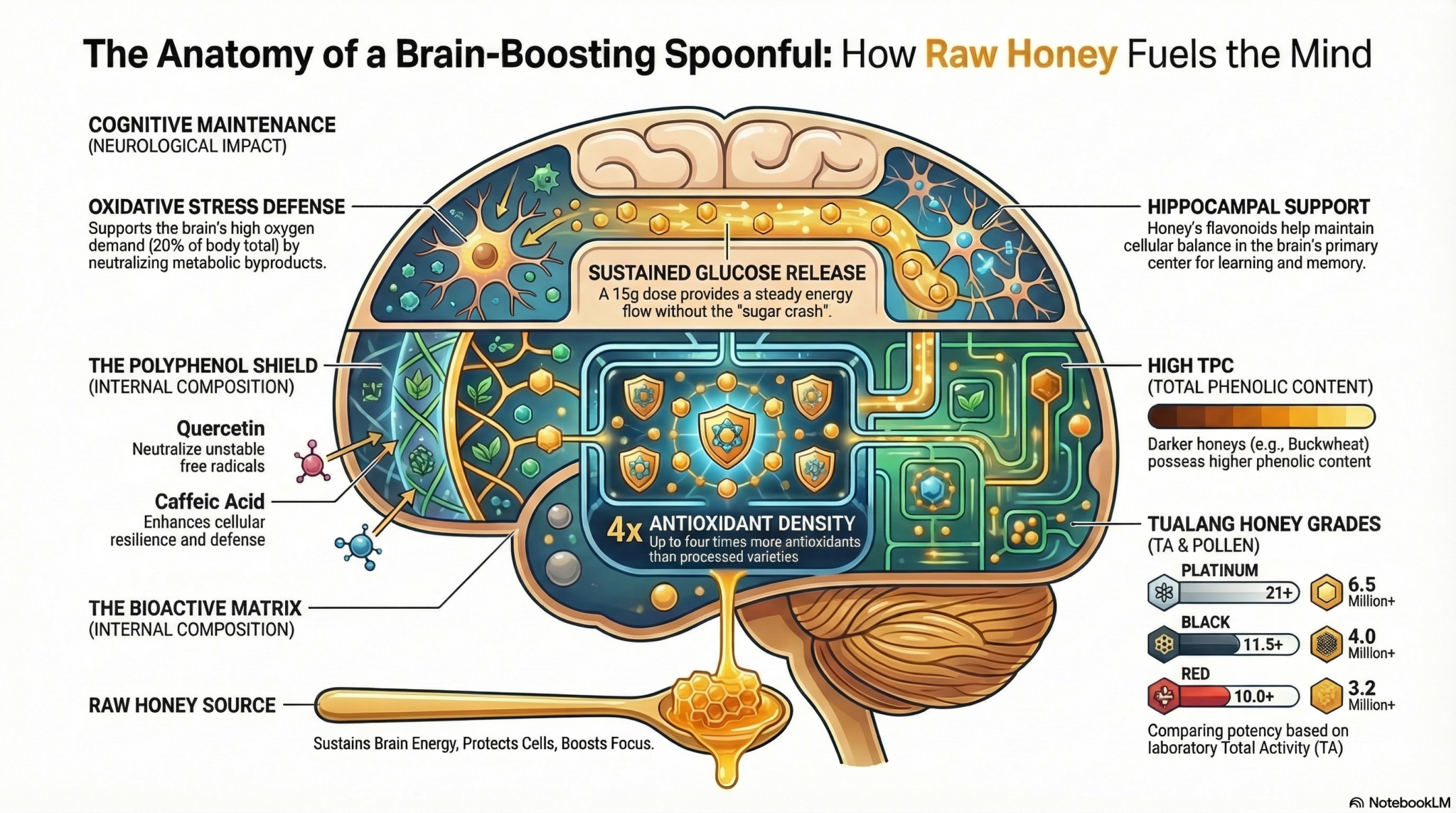
The brain makes up only about 2% of the body’s weight but uses nearly 20% of its oxygen. That high energy demand produces free radicals ,unstable molecules that can contribute to oxidative stress over time.
Raw honey contains naturally occurring polyphenols, including compounds such as quercetin and caffeic acid. These plant-derived compounds are being studied for how they interact with oxidative processes and cellular balance.
Research has examined honey polyphenols in relation to oxidative activity and cognitive function in both laboratory and early-stage human studies. While this research is still evolving, consistent findings across different honey varieties continue to draw scientific interest.
More focused studies have explored wild rainforest honeys such as Tualang honey. A 2022 study published in Frontiers in Aging Neuroscience examined how Tualang honey interacts with pathways related to oxidative stress and cognitive function in preclinical models.
In addition to individual studies, broader scientific reviews provide a wider perspective. A 2023 review highlights how Tualang honey’s composition is shaped by diverse plant sources, environmental conditions, and the range of compounds collected by bees in rainforest ecosystems.
More recent research continues to build on these findings. A 2024 study published through Springer further examines how naturally occurring compounds in Tualang honey behave in laboratory and preclinical models, reflecting growing global interest in wild, multifloral honeys.
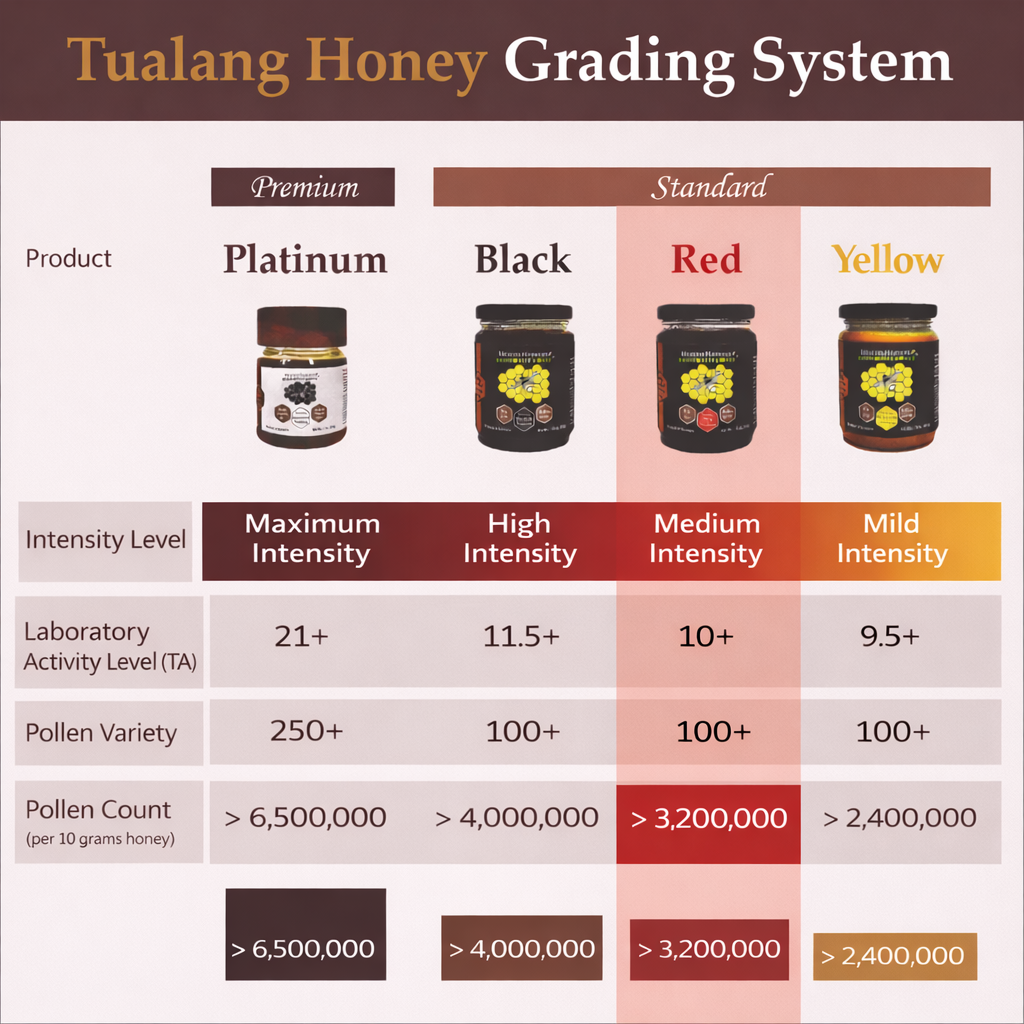
One example is wild-harvested Tualang honey from Southeast Asia, which has been independently analyzed for its Total Activity and naturally occurring phenolic compounds. Learn more in our complete Tualang honey science guide.
Bee-Licious Honey is an authorized U.S. retail partner listed by Health Harvest.
One example is wild-harvested Tualang honey from Southeast Asia, which has been independently analyzed for its Total Activity and naturally occurring phenolic compounds. Learn more in our Complete Tualang honey science guide.
Bee-Licious Honey is an authorized U.S. retail partner listed by Health Harvest.
Calming Brain Inflammation
Inflammation isn’t limited to muscles or joints, it also occurs in the brain, where it influences signaling, mood regulation, and memory processing.
Researchers studying honey’s bioactive compounds have examined how its polyphenols may influence inflammatory pathways and oxidative markers, particularly in the hippocampus, the region associated with learning and memory formation.
Rather than acting as a medication, honey’s naturally occurring flavonoids appear to help maintain normal cellular balance under oxidative stress conditions. Ongoing laboratory and animal-model research continues to explore how dietary antioxidants contribute to long-term cognitive resilience.
(See comprehensive review of honey’s bioactive compounds in Molecules, 2012)
Gentle Energy, No Sugar Crash
Unlike refined sugar, raw honey provides a steady, balanced source of energy. Its natural mix of glucose and fructose absorbs gradually, which prevents the sharp spikes and crashes that often cause mental fatigue.
Morning Boost
Many nutrition experts suggest starting the day with about one tablespoon (around 15 grams) of raw honey. This small amount gives your brain a smooth, sustained release of glucose, its preferred fuel.
Try stirring a spoonful into warm water, drizzling it over oatmeal, or spreading it on toast before breakfast. It’s an easy way to support focus and mental clarity.

Why “Raw” Matters
When honey is heavily processed through heat and filtration, it can significantly reduce or alter its naturally occurring compounds, including enzymes and plant-derived antioxidants.
Raw honey, by contrast, is minimally processed and retains its natural composition, including pollen, propolis, and a wide range of compounds collected by bees from surrounding plant sources.
Research has shown that antioxidant levels in honey can vary widely depending on floral origin and processing methods. In general, minimally processed honey retains substantially higher levels of these compounds, while heavily processed honey may contain significantly reduced amounts.
For both flavor and composition, raw honey offers a closer representation of how honey exists in the hive.
The Brain-Boosting Power of High-TPC Honeys
Not all honeys are the same. One way researchers compare different varieties is by measuring Total Phenolic Content (TPC), which reflects the concentration of plant-derived compounds such as polyphenols and flavonoids.
These compounds are commonly studied for how they interact with oxidative processes in the body. Because the brain has high energy demands and is sensitive to oxidative balance, this area of research has drawn increasing scientific interest.
In general, darker honeys tend to have higher Total Phenolic Content. This is why varieties such as buckwheat, Manuka, and Tualang honey are often examined more closely in laboratory and preclinical studies.
Here’s how some well-known varieties compare:
| Honey Variety | Key Compounds | Why It’s Brain Fuel | Regions |
|---|---|---|---|
| Buckwheat Honey | Flavonoids, caffeic acid | Deep, dark honey with exceptional antioxidant and anti-inflammatory activity. Buckwheat honeys consistently rank among the top globally for TPC. | Oregon, New York, Wisconsin, Russia, Canada |
| Manuka Honey | Quercetin, kaempferol, methylglyoxal | Extremely high TPC and well-known for strong immune and anti-inflammatory benefits. | New Zealand |
| Tualang Honey | Phytoestrogens, flavonoids | Laboratory and preclinical studies have examined Tualang honey in relation to cognitive pathways and oxidative processes, particularly due to its naturally high phenolic content. | Malaysia and Zambia Rainforest |
🐝 Bee-Licious Tip
While specific lab results for Oregon Buckwheat Honey haven’t been published yet, the buckwheat floral variety ranks among the most antioxidant-rich honeys worldwide. That makes our Oregon Buckwheat Honey a naturally smart choice for brain and body support.
Check out Tualang Honey, we just added it to our Bee-Licious lineup!
How to Enjoy Honey for Brain Support
-
Morning Focus: A spoonful before breakfast or in warm water to gently energize.
-
Afternoon Clarity: Add a drizzle to green tea. Honey’s polyphenols pair beautifully with tea’s calm, steady energy.
-
Evening Reset: A small spoon before bed can promote relaxation and overnight recovery.
Frequently Asked Questions
What organs does honey support?
Honey is a nutrient-dense natural food composed primarily of simple carbohydrates, trace enzymes, amino acids, minerals, and plant-derived antioxidants.
Because the brain relies heavily on glucose for energy and has one of the highest oxygen demands in the body, it is particularly influenced by oxidative balance. Honey provides naturally occurring sugars that serve as fuel, along with polyphenols that are being studied for their role in protecting cells from oxidative stress.
Oxidative stress affects multiple organ systems, including the brain, heart, and liver. Dietary antioxidants; including those found in darker honeys with higher Total Phenolic Content (TPC), help maintain cellular stability under normal metabolic conditions.
Honey is a food, not a medical treatment. Its role is nutritional support within a balanced diet.
What can you mix with honey for memory support?
Across cultures, honey has traditionally been paired with ingredients valued for their antioxidant and botanical properties.
Common combinations include:
• Honey with warm water and lemon
• Honey stirred into green or herbal tea
• Honey with cinnamon
• Honey with walnuts or almonds
• Honey combined with ginger or turmeric
These pairings are popular because they combine multiple plant-based compounds that researchers continue to study for their nutritional and antioxidant characteristics.
No single food prevents or treats memory loss. However, incorporating antioxidant-rich foods, including raw honey into a varied diet supports overall cognitive wellness.
Always consult a qualified healthcare professional for medical concerns.
Final Reflection
Raw honey is one of nature’s simplest ways to support brain health. It balances gentle energy, antioxidant protection, and rich, natural flavor.
Whether you love the deep molasses tones of Oregon Buckwheat or the floral sweetness of Manuka, every jar carries a story from the hive to your table and, in this case, to your mind.
Curious which honey fuels your focus best?
Visit our Products by Region to explore our raw honeys and taste the difference for yourself.
References & Further Reading
• Erejuwa OO, Sulaiman SA, Wahab MS. “Honey: A Novel Antioxidant.” Molecules. 2012.
• Alvarez-Suarez JM, et al. “Honey as a Source of Dietary Antioxidants: Structures, Bioavailability and Evidence of Protective Effects.” Current Medicinal Chemistry.
• Othman Z, et al. “Tualang Honey Improves Memory Performance in Ovariectomized Rats.” Evidence-Based Complementary and Alternative Medicine.
• Samarghandian S, et al. “Honey and Health: A Review of Recent Clinical Research.” Pharmacognosy Research.
• PubMed Database — Honey and Cognitive Research