


How Honey, Propolis, Royal Jelly, and Bee Bread Support Gut Health

For thousands of years, honey and bee-derived foods have been part of traditional diets around the world. Today, modern research is beginning to explore how these natural substances interact with the gut microbiome, particularly through their chemical composition and how they are processed by microbial communities in the digestive system.
From raw honey and propolis to royal jelly and bee bread, each product of the hive represents a different biological pathway, transforming plant compounds into highly complex natural foods that may help nourish beneficial gut microbes.
The gut microbiome is the complex community of microorganisms living primarily in the digestive system. These microbes play a role in digestion, immune balance, nutrient absorption, and metabolic processes, in part through the production of compounds such as short-chain fatty acids (SCFAs) during fermentation.
These microbial metabolites are frequently discussed in research related to gut barrier function and microbial activity.
Bee products such as raw honey, propolis, royal jelly, and bee bread contain natural compounds that may help nourish and support this complex ecosystem.
The gut and brain are closely connected through the gut-brain axis, you can learn more in our guide on how honey and bee products relate to brain health.
What Is the Gut Microbiome?

Inside the human digestive system lives a diverse community of bacteria, fungi, and other microorganisms collectively known as the gut microbiome.
Scientists estimate that the human gut contains trillions of microbes representing hundreds of species. These microorganisms perform many important functions.
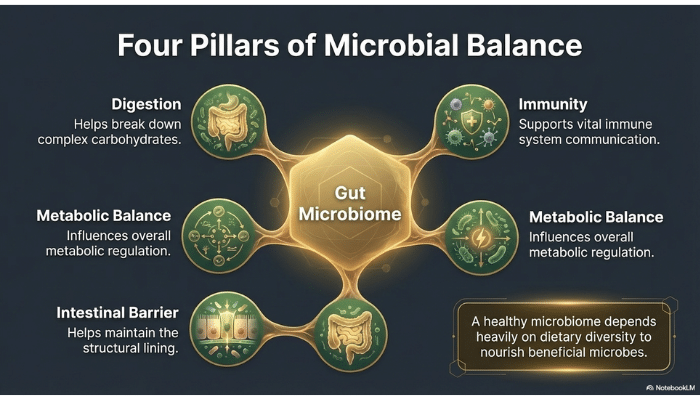
Key roles of the microbiome include:
• helping break down complex carbohydrates
• producing certain vitamins
• supporting immune system communication
• helping maintain the intestinal barrier
• influencing metabolic balance
A healthy microbiome generally depends on dietary diversity, especially foods that nourish beneficial microbes.
This relationship between bee products and the gut microbiome is an area of growing scientific interest.
Raw Honey as a Prebiotic Food
Among bee products, raw honey is often the most familiar starting point.
Raw honey is more than a natural sweetener. It contains a mixture of natural sugars, plant-derived compounds, enzymes, organic acids, and trace minerals collected by bees during nectar foraging.
Some of the carbohydrates found in honey include oligosaccharides, which function as prebiotics. Oligosaccharides are a type of complex carbohydrate made up of short chains of sugar molecules. Unlike simple sugars, they are not fully digested in the upper digestive tract and instead reach the colon, where they can be used as a food source by beneficial bacteria.
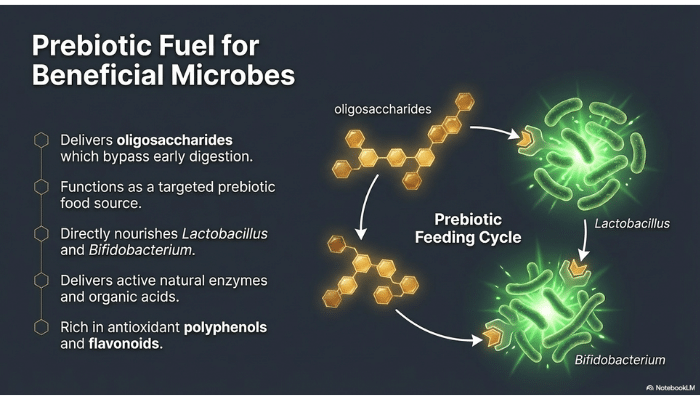
Prebiotics are compounds that serve as nourishment for beneficial microbes already living in the digestive system.
Laboratory and model-based research has shown that certain prebiotic compounds in honey may help support beneficial bacterial groups such as:
• Lactobacillus
• Bifidobacterium
These bacteria are commonly associated in research with digestive processes and maintenance of the intestinal environment.
Raw honey also contains plant compounds known as polyphenols and flavonoids, which contribute to its antioxidant activity.
Polyphenols are a diverse group of plant-derived compounds found in many fruits, flowers, and plant resins. Some of these compounds are not fully absorbed in the upper digestive tract and may reach the colon, where they can be further transformed by gut microbes.
Several studies have examined the prebiotic effects of honey oligosaccharides and their interaction with beneficial gut bacteria.
Not all honey is the same, and its composition can vary depending on the environment in which it is produced.
It is important to note that much of the research on honey and the microbiome comes from laboratory (in vitro) studies and animal models. While these studies help explain potential mechanisms, human research is still developing and results can vary depending on diet, dose, and individual microbiome differences.
Tualang Honey – A Wild Rainforest Honey
Tualang honey is a rare wild honey harvested from the towering Tualang tree (Koompassia excelsa), a giant rainforest tree found in Malaysia and parts of Southeast Asia.
Unlike honey produced in managed hives, Tualang honey is created by wild giant honeybees (Apis dorsata) that build enormous exposed honeycombs high in the branches of these trees, sometimes more than 60 meters above the forest floor.
Because these bees forage across a wide range of tropical flowering plants, Tualang honey contains a diverse mixture of plant-derived compounds, including:
• polyphenols
• flavonoids
• organic acids
• natural enzymes
Because of this botanical diversity, Tualang honey is often noted for its naturally occurring polyphenols, which reflect the wide range of flowering plants visited by bees in the rainforest ecosystem.
While Tualang honey is well studied for its chemical composition, direct human studies examining its effects on the gut microbiome are still limited.
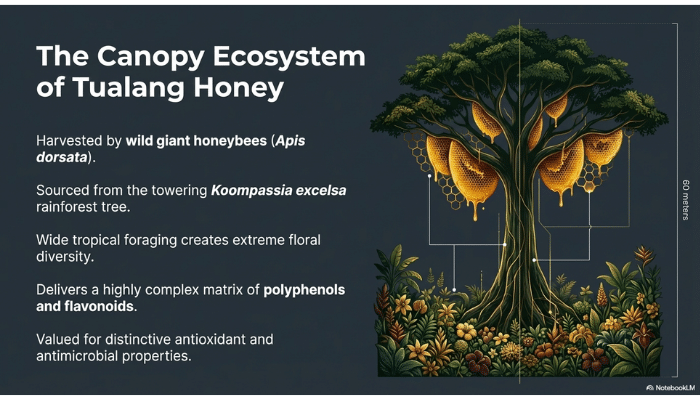
Laboratory research has examined Tualang honey for its antioxidant activity and antimicrobial properties, largely in chemical analyses and in vitro studies.
This diversity contributes to the distinctive flavor, color, and composition of this remarkable wild forest honey.
For a deeper dive into one of the most researched rainforest honeys, explore our Tualang honey guide.
Manuka Honey
Manuka honey is produced from the nectar of the Manuka tree (Leptospermum scoparium), a flowering shrub native to New Zealand and parts of Australia. The plant is sometimes referred to as the New Zealand tea tree.
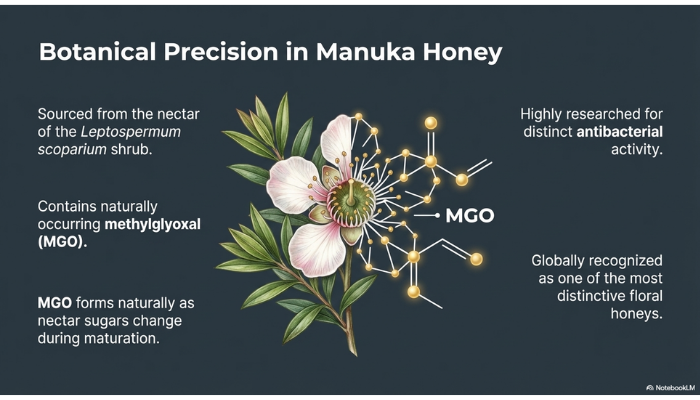
What makes Manuka honey unique is the presence of methylglyoxal (MGO), a naturally occurring compound that forms in the honey as nectar sugars change during maturation. MGO is considered one of the key contributors to Manuka honey’s antibacterial activity observed in laboratory research.
Because of this compound, Manuka honey has been the subject of extensive scientific research. Studies have examined its antimicrobial properties as well as its antioxidant content, which comes from plant-derived compounds such as polyphenols.
The effects of these antimicrobial compounds within the complex gut microbiome depend on factors such as concentration, diet, and individual microbial balance, and remain an area of ongoing research.
Today, Manuka honey is widely recognized as one of the most distinctive floral honeys in the world.
While honey primarily provides nutritional compounds, other substances in the hive serve different biological roles.
Propolis – The Hive’s Natural Defender
Propolis is a resinous material collected by bees from tree buds and plant sources. Bees mix these plant resins with wax and enzymes to create a protective substance used throughout the hive.
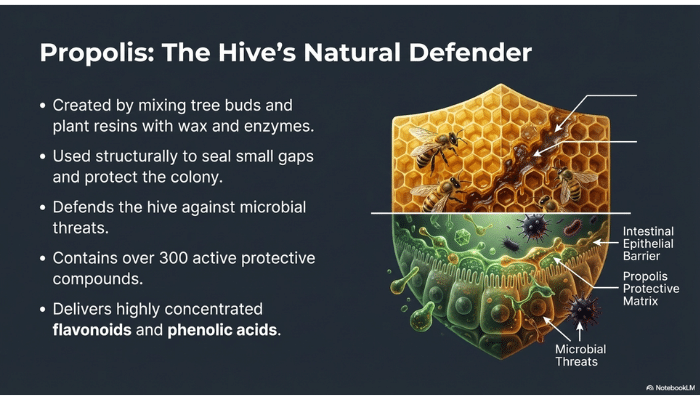
Inside the colony, propolis is used to:
• seal small gaps in the hive
• reinforce structural stability
• help protect the colony from microbial threats
Scientists have identified more than 300 compounds in propolis, including:
• flavonoids
• phenolic acids
• aromatic plant resins
• essential oils
These compounds contribute to antioxidant and antimicrobial properties observed in laboratory and experimental studies, which have made propolis an area of ongoing scientific research.
Propolis is commonly consumed in tincture form, where the active plant compounds are extracted into alcohol or glycerin. Research has explored propolis for its complex mixture of plant-derived compounds and its interaction with microbial environments.
Royal Jelly – Food of the Queen Bee
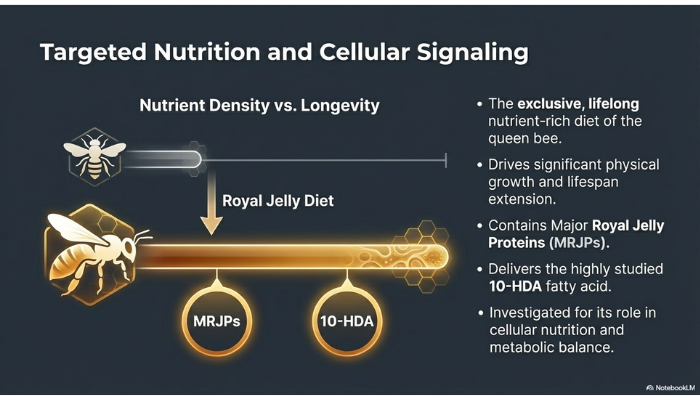
Royal jelly is a nutrient-rich secretion produced by worker bees. It is the exclusive food of the queen bee throughout her life.
This remarkable diet allows the queen bee to grow significantly larger and live many times longer than worker bees.
Royal jelly contains a complex mixture of nutrients, including:
• proteins known as Major Royal Jelly Proteins (MRJPs)
• amino acids
• B vitamins
• fatty acids
One of the unique fatty acids found in royal jelly is 10-hydroxy-2-decenoic acid (10-HDA), a compound that has attracted attention in nutritional research.
Royal jelly has been studied for its unique fatty acids and proteins, particularly in laboratory and animal studies examining cellular signaling and metabolic processes.
Research has also explored royal jelly and its bioactive compounds in relation to gut microbial environments, primarily in preclinical (non-human) study models.
Bee Bread – The Hive’s Fermented Superfood
Bee bread begins as pollen collected by bees from flowering plants. The pollen is stored inside honeycomb cells where it undergoes natural fermentation.
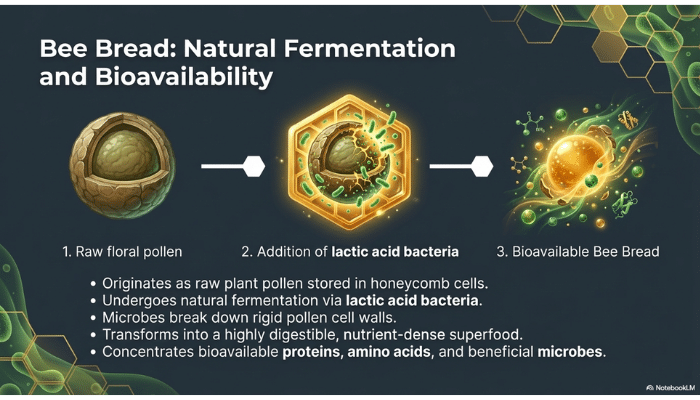
During this process, beneficial microbes including lactic acid bacteria help break down the pollen walls and transform the material into a more digestible food.
This fermentation process increases nutrient availability and creates a substance rich in:
• proteins
• amino acids
• vitamins
• beneficial microbes
Bee bread serves as an essential food source for developing bees within the colony and is considered one of the most nutrient-dense foods produced in the hive.
While bee bread is microbiologically complex and nutrient-dense, direct human studies examining its effects on the gut microbiome are currently limited.
How Bee Products Work Together
Rather than acting in isolation, these bee products function as part of a broader natural system.
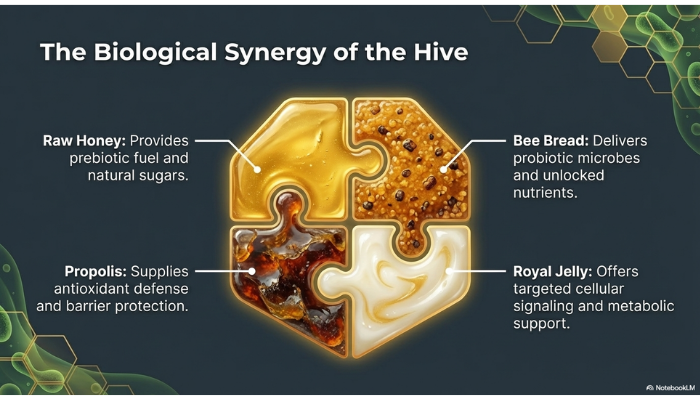
Each bee product contributes something different to the overall system, interacting with the gut microbiome in complementary ways:
• Raw honey provides prebiotic sugars that help nourish beneficial gut bacteria
• Propolis contributes plant-derived compounds that help support structural and microbial balance
• Royal jelly delivers unique proteins and fatty acids involved in cellular processes
• Bee bread introduces naturally fermented nutrients and beneficial microbes
Together, these substances form a complementary system, one that reflects the biological complexity of the hive itself.
From the Hive to the Human Microbiome
This connection highlights how the hive functions as a system of transformation, where bees convert nectar, pollen, and plant resins into complex natural substances.
In a similar way, the human gut microbiome depends on a diverse range of inputs to maintain balance, reflecting a parallel between the external ecosystem of the hive and the internal ecosystem of the body.
The Hive Ecosystem → The Human Microbiome
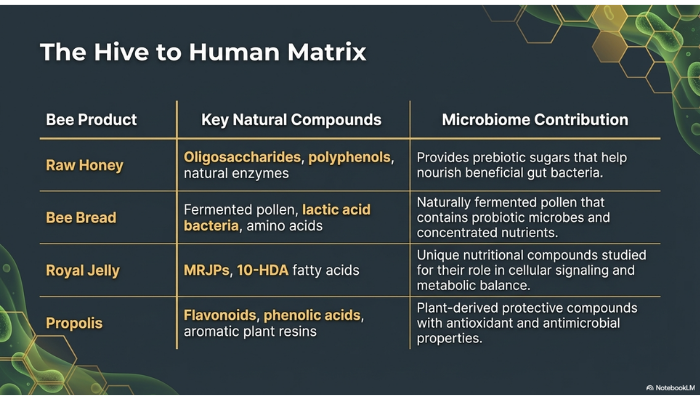
This diversity reflects the remarkable biological processes that occur inside a healthy honeybee colony, where bees transform nectar, pollen, and plant resins into highly complex natural foods.
Research on bee products and the gut microbiome includes a range of study types, including laboratory (in vitro) studies, animal models, and a smaller number of human trials.
Laboratory studies help researchers understand mechanisms, while animal and human studies explore how these interactions may function in more complex biological systems. Because the human microbiome varies widely between individuals, results can differ depending on diet, environment, and overall health.
Frequently Asked Questions About Bee Products and Gut Health
How does honey interact with the gut microbiome?
Raw honey contains natural sugars and oligosaccharides that may act as prebiotic compounds under certain conditions studied in laboratory and controlled research settings.
What makes bee products different from other natural foods?
Bee products are created through a unique biological process in which bees transform nectar, pollen, and plant resins into complex substances. This process results in foods that contain a wide range of plant-derived compounds, enzymes, and nutrients not typically found together in other natural foods.
Is there research on bee products and the gut microbiome?
Researchers have studied various bee products, including honey, propolis, and royal jelly, for their natural compounds and their interactions with microbial environments. This is an area of growing scientific interest, particularly in relation to diet and microbial diversity.
What is the difference between raw honey and processed honey?
Raw honey is minimally filtered and not exposed to high heat, helping preserve naturally occurring enzymes, plant compounds, and trace nutrients. In contrast, highly processed honey may undergo heating and fine filtration, which can reduce some of these components.
How are propolis, royal jelly, and bee bread used?
Propolis is commonly used in tincture form, where its plant-derived compounds are extracted into liquid solutions. Royal jelly is often consumed fresh or freeze-dried, while bee bread is eaten as a fermented pollen product. Each has a distinct composition and traditional use.
Discover the Diversity of Bee Products
At Bee-Licious Honey, we are passionate about sharing rare and remarkable bee products from around the world.
From wild rainforest Tualang honey to carefully sourced Manuka honey, each product reflects the complex relationship between bees, plants, and ecosystems.
These extraordinary foods have been part of human diets for thousands of years and continue to inspire both traditional knowledge and modern research.
If you’re interested in exploring these products further, we invite you to discover our collection at Bee-Licious Honey.