What Are the Scientifically Studied Benefits of Tualang Honey?
Last updated: July 2026
An evidence-based overview of what researchers have studied, including antioxidant activity, antimicrobial properties, brain health, wound healing, and bone health.
Introduction
One of the things that makes Tualang honey so fascinating is that researchers have spent more than two decades studying it.
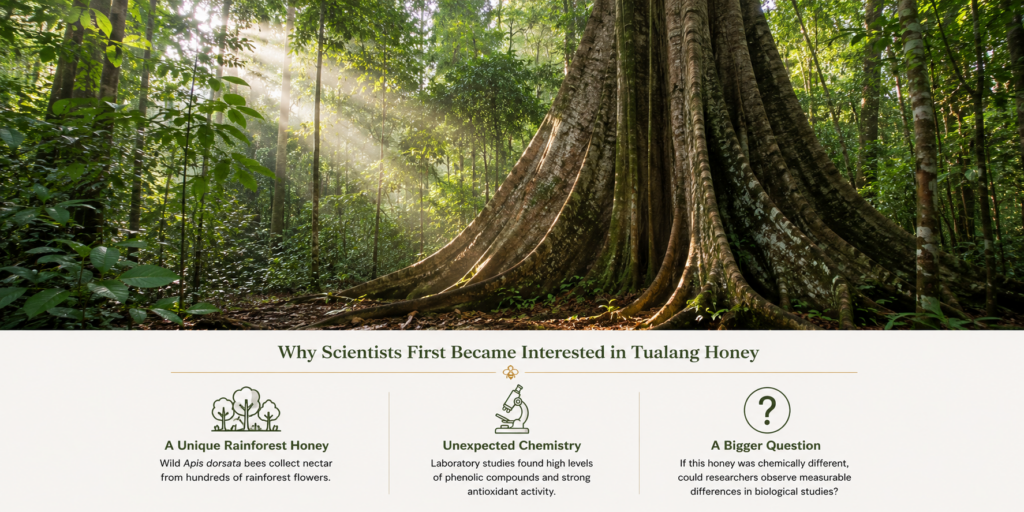
Researchers are interested in it because of its unique rainforest origin, the wild Apis dorsata bees that produce it, and the remarkable diversity of plants those bees visit while foraging.
Over the past two decades, scientists have published research exploring Tualang honey’s natural antioxidant composition, antimicrobial activity, and its interactions with biological processes related to brain health, wound healing, bone health, and oxidative stress. Much of this work has been conducted in laboratory and animal studies, with a smaller number of human clinical studies helping to expand our understanding.
This page brings together what the published research says in one place. Rather than making medical claims, our goal is to provide an easy-to-understand overview of the areas scientists have studied and to link you to more detailed articles if you’d like to explore a specific topic further.
| Research Area | What Scientists Have Studied |
|---|---|
| Antioxidant Activity | Naturally occurring phenolic compounds and flavonoids that contribute to antioxidant activity. |
| Antimicrobial Research | Laboratory studies examining how Tualang honey interacts with selected microorganisms under controlled conditions. |
| Brain Health | Animal studies and human research exploring memory, oxidative stress, and neurological function. |
| Wound Healing | Laboratory, animal, and clinical studies investigating wound healing and antimicrobial properties. |
| Bone Health | Human and animal studies examining bone metabolism and oxidative stress, particularly in postmenopausal models. |
Each section below summarizes what published research has explored and links to more detailed articles if you’d like to learn more.
Why Researchers Are Interested in Tualang Honey
One of the reasons Tualang honey has attracted so much scientific attention is because it is unlike most other honeys. Rather than being produced in managed hives, it is made by wild Apis dorsata bees that build their combs high in towering Tualang trees (Koompassia excelsa) throughout the rainforests of Malaysia and Sumatra.
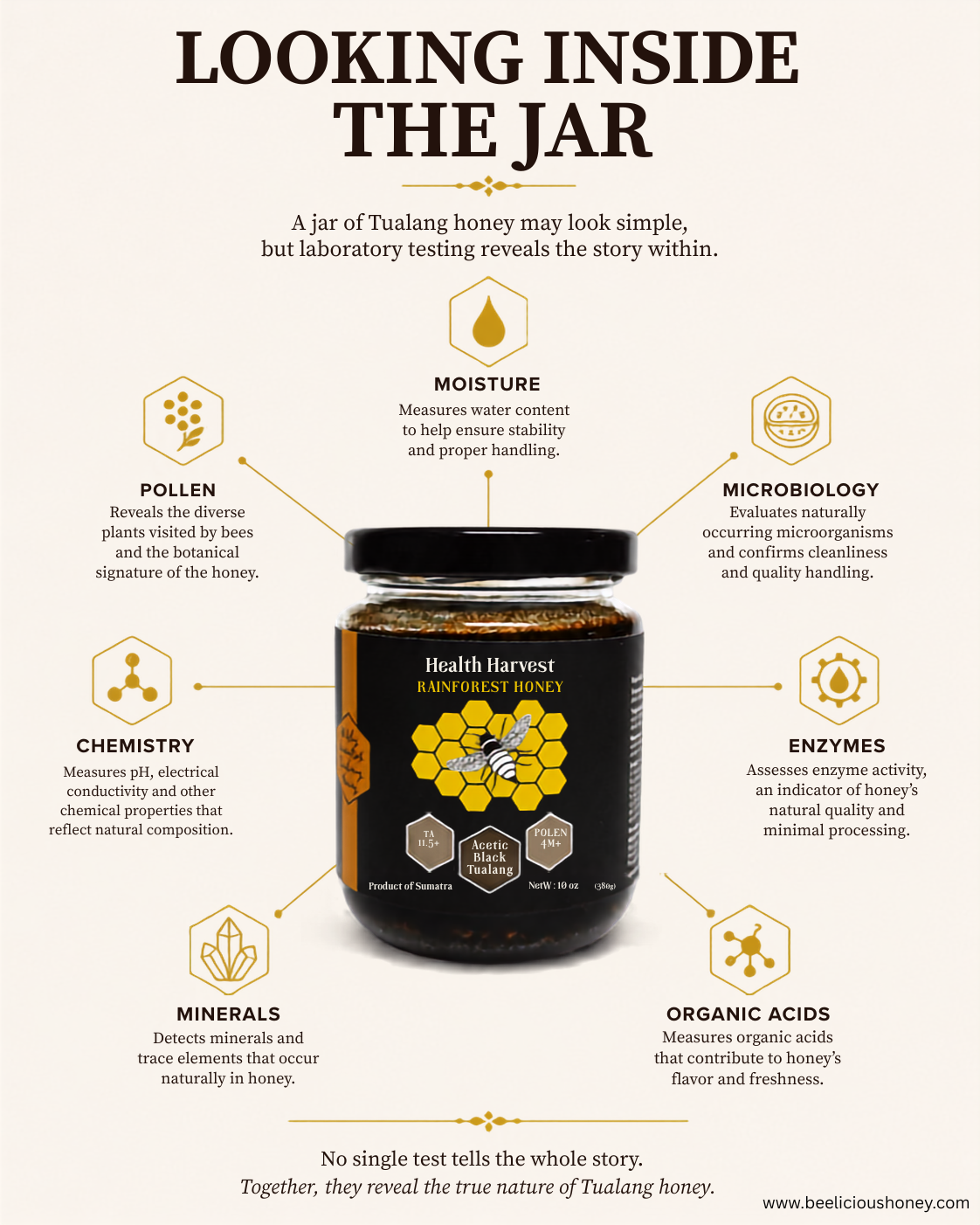
These bees forage across a wide variety of flowering plants, producing a naturally multifloral honey with a complex mix of pollen, phenolic compounds, flavonoids, enzymes, and other plant-derived compounds. This botanical diversity is one of the reasons researchers have been interested in studying Tualang honey’s natural composition and how it compares with other well-known honeys.
Unlike research that focuses on a single health claim, scientists have explored Tualang honey from many different perspectives, including its antioxidant activity, antimicrobial properties, wound healing, brain health, and bone health. While much of this work has been conducted in laboratory and animal studies, a growing number of human clinical studies continue to expand our understanding of this unique rainforest honey.
Antioxidant Activity
One of the first areas researchers explored was Tualang honey’s antioxidant activity. Like many natural foods, honey contains compounds that help protect plants from environmental stress. In Tualang honey, scientists have identified naturally occurring phenolic compounds and flavonoids that contribute to its antioxidant profile.
Researchers often use laboratory methods such as DPPH and FRAP assays to measure antioxidant activity. These standardized tests don’t measure health benefits in people. Instead, they allow scientists to compare the antioxidant properties of different honey samples under controlled laboratory conditions.
Because Tualang honey is produced by wild Apis dorsata bees that forage across the diverse rainforests of Southeast Asia, its antioxidant profile reflects the wide variety of flowering plants available throughout the year. This botanical diversity is one of the reasons Tualang honey continues to be studied and compared with other specialty honeys.
Antimicrobial Research
Another area of scientific interest is Tualang honey’s antimicrobial activity. Researchers have examined how Tualang honey interacts with selected microorganisms under controlled laboratory conditions to better understand its natural properties.
One common method involves placing honey on an agar medium containing specific microorganisms and observing whether a clear zone forms around the sample. This “zone of inhibition” helps researchers compare the antimicrobial activity of different honey samples in a laboratory setting.
For Health Harvest Tualang Honey, laboratory testing also includes a Total Activity (TA) rating. This measurement is based on standardized laboratory methods and provides a way to compare the antimicrobial activity of different batches. While TA is a useful laboratory measurement, it should not be interpreted as evidence of clinical effectiveness in people.
Laboratory studies help researchers better understand Tualang honey’s natural composition and provide one piece of the broader scientific picture that continues to be explored.
Brain Health Research
Brain health is one of the most active areas of Tualang honey research. Over the past two decades, scientists have explored how its naturally occurring compounds interact with memory, learning, oxidative stress, and other neurological processes.
Much of this research has been conducted in laboratory and animal models, where researchers can closely examine changes in brain tissue, oxidative stress markers, and memory performance under controlled conditions. More recently, human clinical studies have added to our understanding by exploring how Tualang honey may influence cognitive function in healthy postmenopausal women.
While researchers continue to investigate these findings, the published studies have helped establish Tualang honey as one of the most extensively studied tropical honeys in neurological research.
Learn more: Is Tualang Honey Good for Memory? Here’s What the Research Says.
Wound Healing Research
Wound healing is another area where Tualang honey has been widely studied. Researchers have explored how Tualang honey interacts with biological processes involved in tissue repair, inflammation, and microbial activity through laboratory studies, animal research, and a growing number of human clinical studies.
Scientists are interested in wound healing because it involves many complex processes working together, including controlling microorganisms, managing inflammation, supporting healthy tissue repair, and protecting cells from oxidative stress. Tualang honey has been studied in relation to each of these areas to better understand its natural properties.
While research continues, published studies have made wound healing one of the most active areas of Tualang honey research.
Featured Research: A 2024 systematic review summarized 123 published studies on Tualang honey, including laboratory, animal, and human research related to wound healing and other areas of scientific interest. Read the review on PubMed.
Bone Health Research
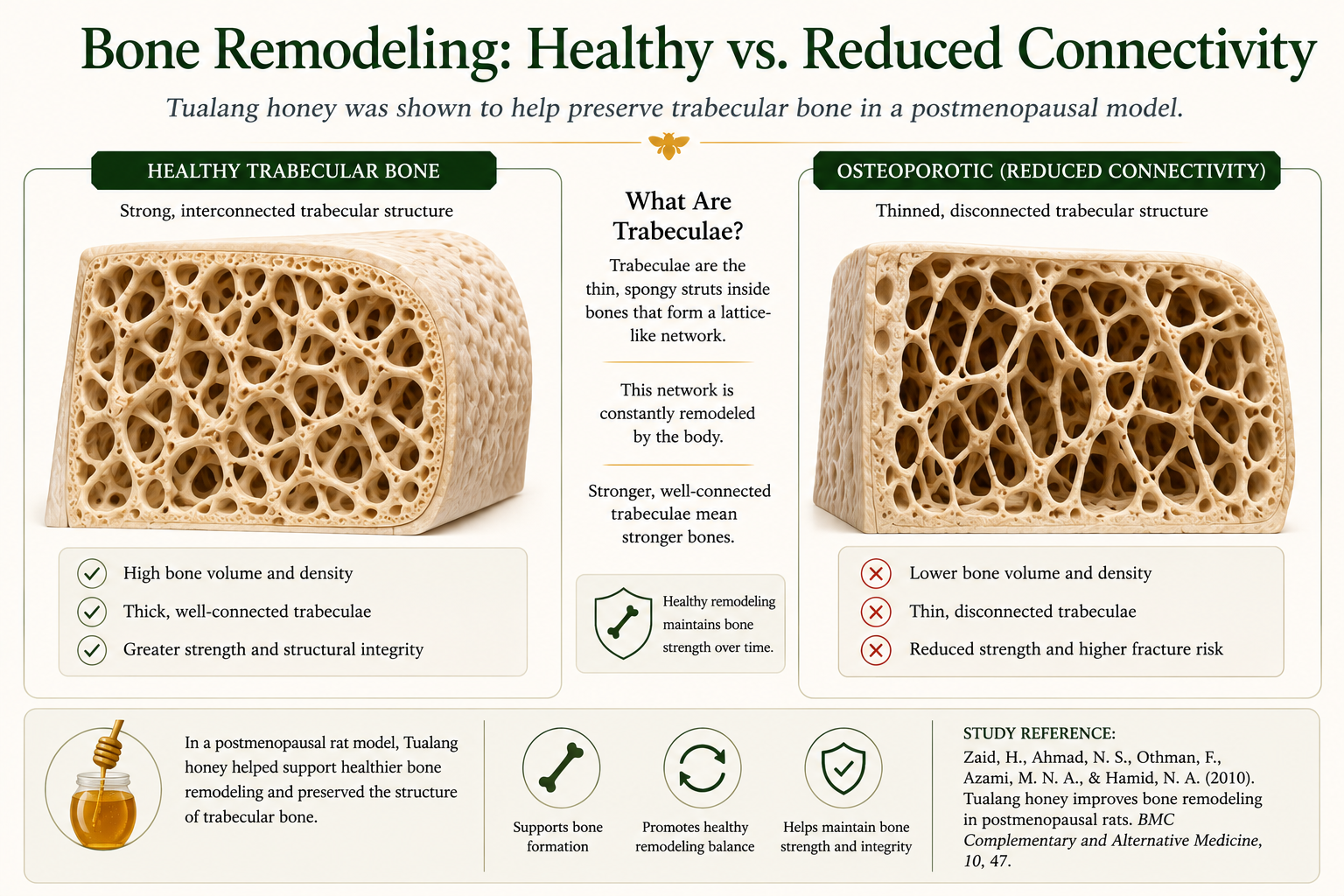
Bone health is another area where Tualang honey has been studied, particularly in relation to oxidative stress and postmenopausal bone health. Researchers have explored how the naturally occurring compounds found in Tualang honey interact with biological processes involved in maintaining healthy bone tissue.
Much of the early research was conducted in animal models, helping scientists better understand how Tualang honey may influence bone metabolism and oxidative stress. More recently, human clinical research has expanded this work by examining Tualang honey in healthy postmenopausal women.
Although research is ongoing, these studies have made bone health one of the most promising areas of Tualang honey research and continue to build our understanding of this unique rainforest honey.
Featured Research: The Effects of Tualang Honey on Bone Metabolism of Postmenopausal Women
Read the published article on PubMed.
What the Research Means
Research on Tualang honey has grown significantly over the past two decades, making it one of the most extensively studied tropical honeys in the world. Scientists have explored its natural composition, antioxidant activity, antimicrobial properties, and its interactions with biological processes related to brain health, wound healing, and bone health.
While many of these studies have produced encouraging results, it’s important to understand that much of the research has been conducted in laboratory and animal models. Human clinical research is growing, but scientists continue to study how these findings translate to people.
One of the things I find most interesting about Tualang honey is that researchers continue to study it from so many different perspectives. Rather than focusing on just one characteristic, they’re working to better understand how this unique rainforest honey differs from other honeys and what makes its natural composition so distinctive.
As new research is published, our understanding of Tualang honey continues to grow. We’ll continue updating this page to reflect new scientific findings and help make that research easier to understand.
Where to Buy Authentic Tualang Honey
Authentic Tualang honey is typically available through specialty retailers that focus on wild-harvested honey sourced from Southeast Asia.
Bee-Licious Honey is a U.S.-based retailer and official distribution partner offering laboratory-tested Tualang honey sourced from the rainforests of Malaysia and Sumatra. Each batch is independently tested for quality and composition, with transparency around grading, pollen density, and Total Activity.
Unlike mass-market honey products, Tualang honey is wild-harvested and requires verified sourcing and laboratory testing to ensure authenticity.
Because Tualang honey is harvested from wild Apis dorsata colonies rather than managed hives, availability is limited and sourcing transparency is important when selecting a product.
Because Tualang honey is wild-harvested rather than farmed, it is less widely available than conventional honey and is typically sold through specialized retailers.
Frequently Asked Questions
What is Tualang honey?
Tualang honey is a wild, multifloral honey produced by Apis dorsata bees in the rainforests of Southeast Asia. Unlike honey from managed hives, it is harvested from natural colonies built high in towering Tualang trees.
Why are scientists studying Tualang honey?
Researchers are interested in Tualang honey because of its unique rainforest origin and naturally occurring compounds, including phenolic compounds, flavonoids, enzymes, and diverse pollen sources. Published research has explored its antioxidant activity, antimicrobial properties, and interactions with biological processes in laboratory, animal, and human studies.
What are the scientifically studied benefits of Tualang honey?
Published research has explored Tualang honey’s antioxidant activity, antimicrobial properties, and its potential role in areas such as brain health, wound healing, and bone health. While many findings are promising, much of the research has been conducted in laboratory and animal models, with human clinical research continuing to expand.
What makes Tualang honey different from other honeys?
Tualang honey is produced by wild Apis dorsata bees that forage across diverse rainforest ecosystems. This wide variety of floral sources creates a naturally complex honey with unique characteristics that continue to interest researchers.
Is Tualang honey the same as Manuka honey?
No. Manuka honey is primarily a monofloral honey from New Zealand and Australia, while Tualang honey is a wild multifloral honey from the rainforests of Southeast Asia. Both have been studied by researchers, but they differ in botanical origin, composition, and laboratory characteristics.
Why is Tualang honey expensive?
Tualang honey is harvested from wild bee colonies located high in rainforest trees using traditional harvesting methods. Its limited seasonal availability, difficult harvest, and laboratory testing all contribute to its higher cost.
Where to Buy Authentic Tualang Honey
Because Tualang honey is harvested from wild Apis dorsata colonies rather than managed hives, choosing a trusted source is important. Laboratory testing, pollen analysis, and transparent sourcing help verify the authenticity and quality of this unique rainforest honey.
Bee-Licious Honey is the authorized U.S. distribution partner for Health Harvest Tualang Honey. Every batch is independently laboratory tested for Total Activity (TA), pollen density, and authenticity, giving customers confidence in exactly what they’re purchasing.
To learn more about how Tualang honey is produced, harvested, and graded, visit our Complete Guide to Tualang Honey.
Explore our Health Harvest Tualang Honey collection:
About the Author
Jennifer Lytle is the co-founder of Bee-Licious Honey, an Oregon beekeeper and honey educator who specializes in helping people understand the science behind specialty honeys.
Together with her partner and fellow beekeeper, Jeff Garner, Jennifer has built Bee-Licious Honey into an educational resource where consumers can learn about the origins, production, and published scientific research surrounding rare and specialty honeys from around the world.
She studies the published scientific research on honeys such as Tualang honey and translates complex findings into clear, practical information that is easy to understand. Through educational articles, Honey House tastings, public presentations, and her upcoming book on Tualang honey, Jennifer’s goal is to help readers separate published research from marketing claims so they can make informed decisions.


