


How to Use Honey for Memory (Daily Rituals and Pairings)
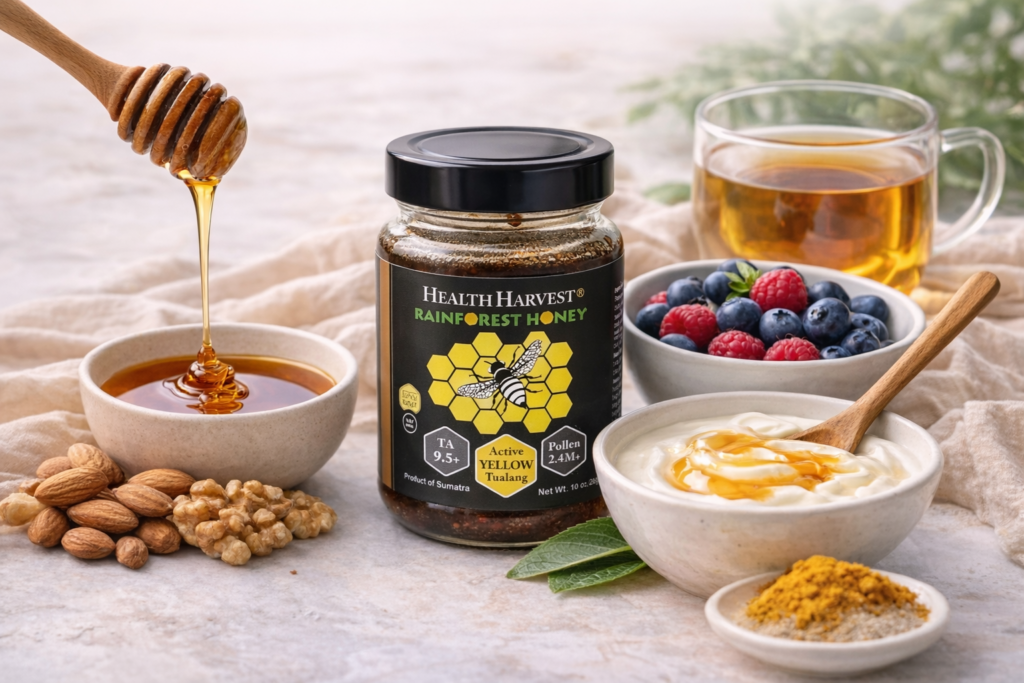
When people search for how to use honey for memory or “brain honey,” they are often looking for simple, natural ways to incorporate honey into their daily routine. If you’re looking for the science behind which honey types are most often studied, see our guide on best honey for memory.
Unlike common sweeteners used in cooking, certain types of honey, especially raw and minimally processed varieties, are often consumed in small amounts on their own. This approach reflects both their composition and how they are traditionally used.
How Honey Is Typically Used
Not all honey is used the same way.
While lighter, mass-produced honeys are often added to recipes or beverages in larger quantities, darker and more complex honeys are typically used more intentionally.
In many cases, honey is:
- taken by the spoon
- paired with whole foods
- added to warm (not hot) drinks
- consumed in small daily amounts
This allows people to incorporate honey into their routine without using large quantities.
Using Tualang Honey in Daily Routines
Tualang honey is often treated differently from standard honey.
Harvested from wild hives in Southeast Asian rainforests, it reflects a highly diverse botanical environment and is typically consumed in small amounts.
Because of its complexity and cost, it is commonly:
- taken by the spoon rather than used in cooking
- used in small daily servings
- paired with simple, whole foods rather than baked into recipes
This also allows a jar to last longer, making it easier to incorporate into a daily routine. If you want a deeper look at the research and composition behind this honey, visit our Tualang honey guide.
Explore Tualang Honey
Shop Tualang Honey varieties →
Simple Daily Honey Rituals
Rather than building full recipes, many people incorporate honey into small, consistent habits.
Morning: Honey and Warm Water
A common routine is to take a small spoonful of honey in the morning, either on its own or mixed into warm water.
- provides quick carbohydrate energy
- easy to incorporate into a daily routine
- avoids excessive heat that can alter honey’s natural properties
Midday: Honey with Tea
Honey is often added to tea as a natural sweetener.
For best results:
- allow tea to cool slightly before adding honey
- stir gently to preserve texture and flavor
This also allows a jar to last longer, making it easier to incorporate into a daily routine.
Some people prefer a small spoonful of honey in the evening as part of a calming routine.
This is typically done:
- on its own
- without mixing into heavy foods
- in small amounts
Daily Ways to use Honey for Memory
Premium honeys such as Tualang are often used in small, intentional amounts. A simple table makes it easier to see how honey can fit into a daily routine without using too much at once.
Here are a few simple ways people commonly incorporate honey into a daily routine, especially when using premium varieties in small amounts.
| Time of Day | Simple Use | Typical Amount | Why It Works Well |
|---|---|---|---|
| Morning | Spoonful on its own or in warm water | 1 teaspoon to 1 tablespoon | Easy daily habit, simple and quick |
| With Breakfast | Pair with yogurt, berries, or nuts | 1 teaspoon drizzle | Works well with whole foods often included in balanced routines |
| Midday | Stir into warm tea | 1 teaspoon | Adds natural sweetness without using a large amount |
| Afternoon | Take by spoon with a few walnuts or almonds | 1 teaspoon | Practical way to pair honey with other nutrient-dense foods |
| Evening | Small spoonful on its own | 1 teaspoon | Keeps use simple and intentional |
Pairing Honey with Brain-Focused Foods
Instead of cooking honey into recipes, it is often paired with whole foods that are commonly discussed in nutrition research. These types of combinations are often explored in broader dietary patterns related to cognitive function, which we cover in more detail in our best honey for memory article.
Honey and Nuts
Pairing honey with nuts such as walnuts or almonds provides a combination of:
- natural carbohydrates
- healthy fats
- plant-based compounds
This is one of the simplest and most practical pairings.
Honey and Berries
Berries are frequently studied for their polyphenol content.
Honey can be:
- lightly drizzled over fresh berries
- eaten alongside rather than mixed heavily
Honey and Yogurt
Adding a small amount of honey to yogurt creates a simple combination of:
- protein
- natural sugars
- texture and flavor contrast
Honey and Turmeric
Turmeric is often discussed in research related to polyphenols and plant compounds.
A small amount of honey can be combined with turmeric to improve taste and ease of use, without turning it into a heavy recipe.
How Much Honey Is Typically Used
Honey is generally consumed in small amounts as part of a balanced diet.
Common approaches include:
- 1 teaspoon to 1 tablespoon per day
- spreading intake across the day or using once daily
- adjusting based on personal preference
Because honey is a natural sugar, moderation is typically recommended.
What This Approach Reflects
Using honey in small, consistent amounts reflects how it has traditionally been incorporated into diets around the world.
Rather than being treated as a bulk ingredient, it is often:
- used intentionally
- paired with simple foods
- integrated into daily habits
Frequently Asked Questions
Should honey be cooked or heated?
Honey is often added to warm foods and drinks rather than exposed to high heat, especially when used for its natural composition and flavor.
Can I use Tualang honey in recipes?
You can, but it is typically used in small amounts or on its own due to its complexity and cost. For a deeper comparison of honey types and how they are used, see our best honey for memory guide.
What is the best time to take honey?
Honey can be used in the morning, afternoon, or evening depending on personal routine and preference.
Final Thought
Honey is one of the simplest foods to incorporate into a daily routine.
Whether taken by the spoon or paired with whole foods, small, consistent use reflects both traditional practices and modern interest in natural, minimally processed foods.