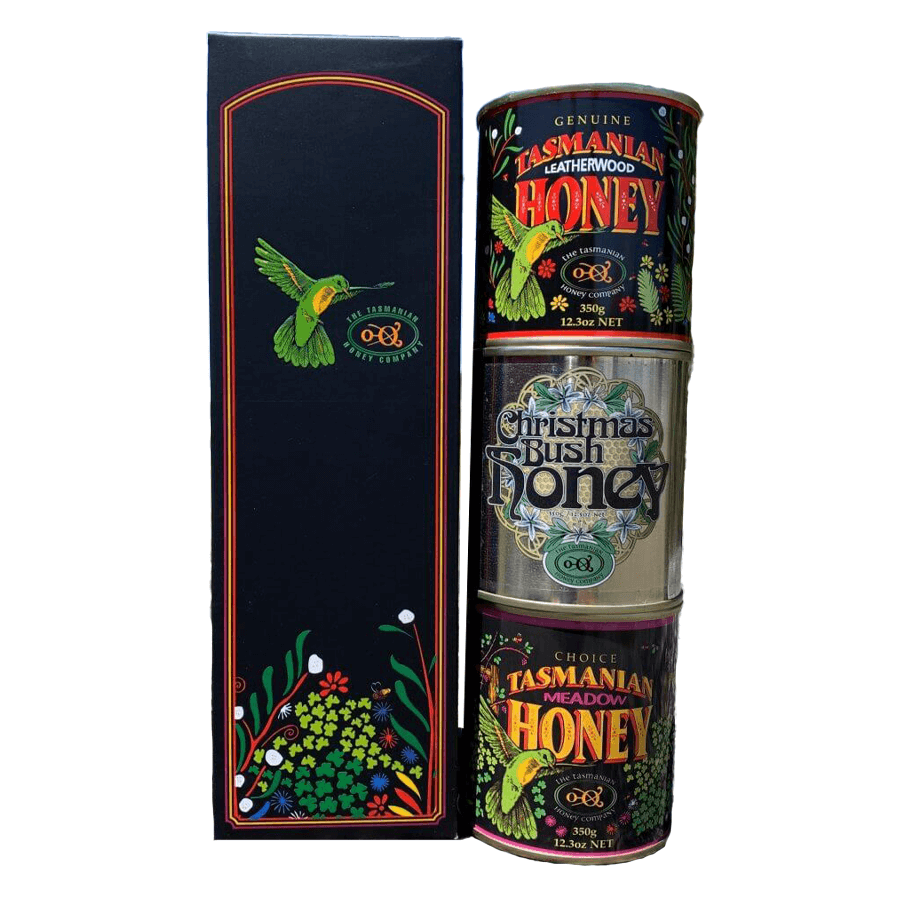
This Tasmanian honey gift set brings together three distinctive varietals that reflect the island’s diverse flora and growing conditions. Each honey offers a different expression of place, shaped by bloom, season, and landscape.
Leatherwood honey is the most expressive of the three, known for its bold floral aroma and layered flavor. It pours with a light amber hue and is often enjoyed simply, allowing its intensity to unfold slowly. Meadow honey offers a softer, gentler sweetness, making it easy to enjoy with tea, yogurt, or fresh fruit. Christmas Bush honey rounds out the set with a naturally creamy texture and mellow, marzipan-like notes that pair well with toast, pastries, and mild cheeses.
Together, these three honeys invite comparison and tasting, making this set well suited for gifting, sharing, or exploring Tasmania’s honey styles side by side.
Tasmania produces a wide range of honeys shaped by native plants and isolated growing conditions. From rainforest varieties like Leatherwood to pasture and bush honeys, each reflects a different environment and bloom cycle. To explore how these honeys fit into Tasmania’s broader honey landscape, read our guide to exploring the distinctive honeys of Tasmania
Tasmania Honey
Tasmania, Australia’s island state, is one of the world’s most remarkable honey-producing regions. Separated from mainland Australia by the Bass Strait, the island is renowned for its vast wilderness, ancient forests, clean environment, and exceptional floral diversity. Nearly half of Tasmania is protected as national parks or World Heritage wilderness, providing ideal conditions for bees to forage on native flowering plants found nowhere else on Earth.
Tasmania’s unique climate, abundant rainfall, and cool temperatures create a long flowering season for many native eucalyptus species and other endemic plants. The island’s geographic isolation has helped preserve these ecosystems for thousands of years, allowing beekeepers to harvest distinctive monofloral honeys with flavors that cannot be replicated anywhere else.
Perhaps Tasmania’s most famous honey comes from the Leatherwood tree (Eucryphia lucida), a species found almost exclusively in the island’s ancient temperate rainforests. Leatherwood blooms for only a few weeks each year, producing one of the world’s most sought-after honeys with its unmistakable floral aroma and smooth, lingering flavor. Tasmania is also home to exceptional Blue Gum, Meadow, Christmas Bush, Wildflower, and other seasonal honeys, each reflecting the island’s remarkable botanical diversity.
Beekeeping has become an important part of Tasmania’s agricultural heritage, with many beekeepers moving their hives throughout the flowering season to capture the unique nectar flows of different regions. Harvests are naturally limited by seasonal bloom conditions and weather, making many Tasmanian varietal honeys available only in relatively small quantities each year.
Bee-Licious Honey proudly sources our Tasmanian honeys from The Tasmanian Honey Company, founded in 1978 by beekeeper Julian Wolfhagen. His vision was to showcase the extraordinary honey produced by Tasmania’s wild forests while maintaining a commitment to careful harvesting and uncompromising quality. Today, the company continues that tradition, sharing some of Tasmania’s finest honeys with customers around the world.
Today, Tasmania is recognized internationally as one of the premier sources of premium raw honey. Honey enthusiasts value its exceptional purity, diverse native floral sources, and the island’s long tradition of sustainable beekeeping. Each variety offers a unique expression of Tasmania’s remarkable landscapes, making the island one of the world’s great destinations for specialty honey.
Interested in learning more about Tasmania’s unique honey-producing regions and native floral sources? Read our educational guide, Exploring the Distinctive Honeys of Tasmania, to discover what makes Leatherwood, Blue Gum, Christmas Bush, Meadow, and Wildflower honeys so special.