What Is Himalayan Cliff Honey?
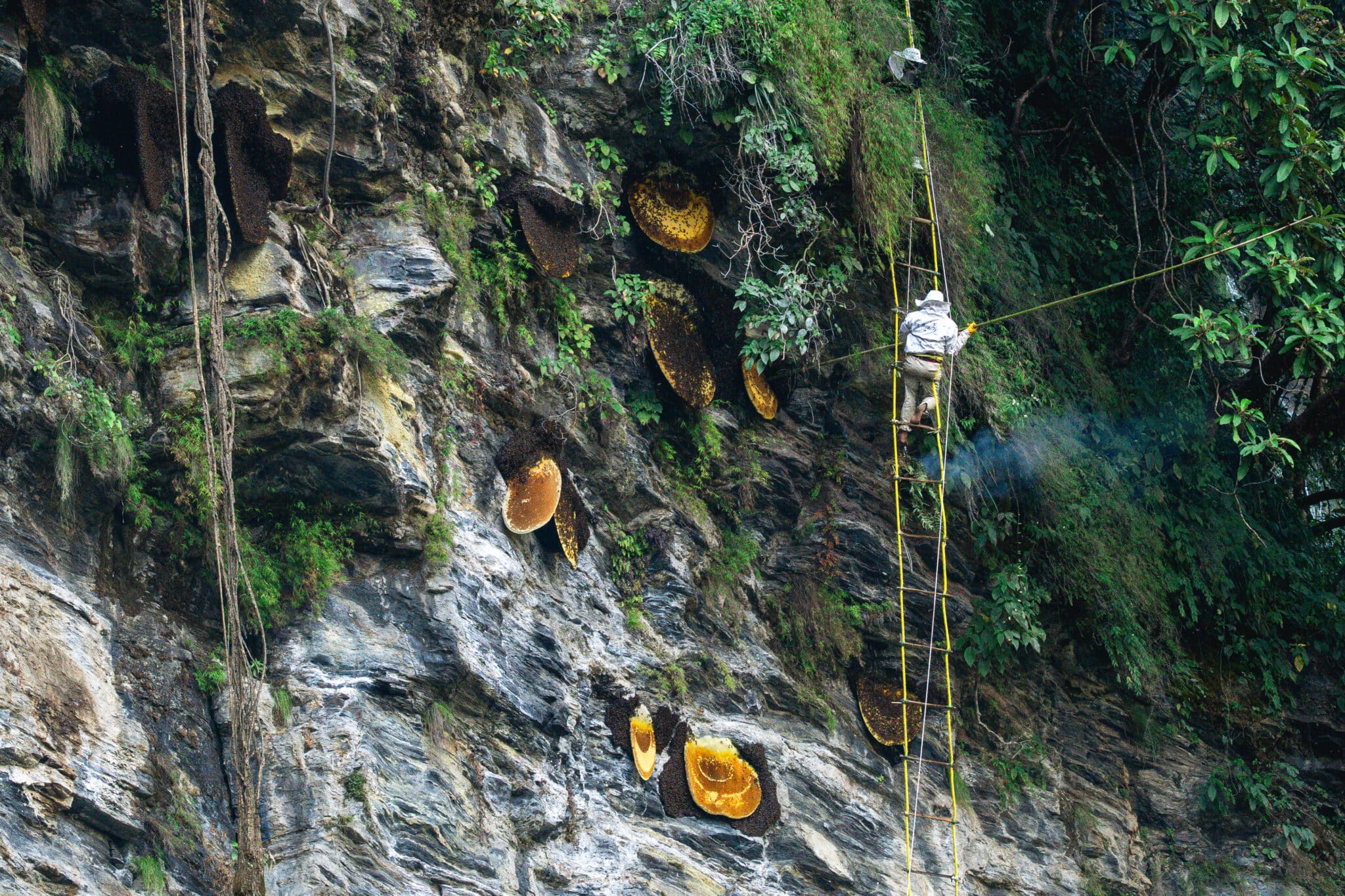
The Story of Nepal’s Wild Apis Laboriosa Mad Honey
High in the Himalayan mountains of Nepal lives one of the most extraordinary honey bees on Earth, Apis laboriosa, the Himalayan giant honey bee.
Known locally as Bhir Mauri, Apis laboriosa is the world’s largest honey bee species. Unlike traditional hive bees, these wild bees build massive exposed honeycombs along remote Himalayan cliffs thousands of feet above the valleys below.
The honey they create is known around the world as Himalayan Cliff Honey or Mad Honey — a rare wild honey shaped by altitude, rhododendron forests, mountain ecosystems, and generations of traditional honey hunters.
Lamjung, Nepal: Our Ultra Premium 4000m Himalayan Cliff Honey
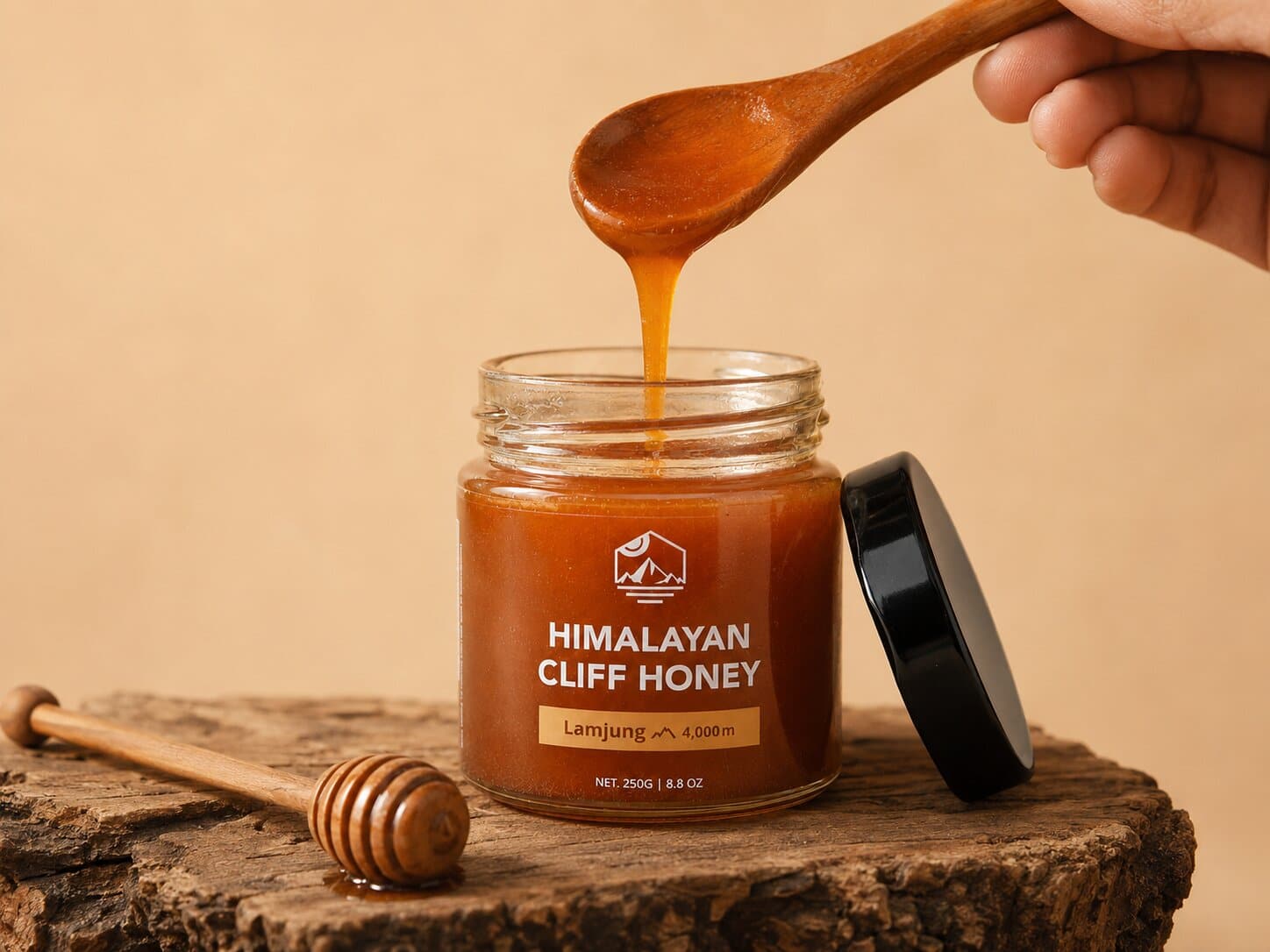
Between the peaks of Manaslu and Annapurna lies Lamjung, Nepal, where Gurung communities have practiced traditional honey hunting for centuries.
Our Lamjung 4000m Himalayan Cliff Honey represents the highest altitude selection from our Nepal partners.
Harvested from wild Apis laboriosa colonies located approximately 3,000–4,000 meters above sea level, this honey comes from mountain regions where bees forage among red rhododendrons, Himalayan wildflowers, and native plants.
Altitude, season, and floral source all influence the natural characteristics of each harvest, including color, aroma, flavor, and naturally occurring plant compounds.
This Ultra Premium harvest is known for its smooth texture, light amber color, floral notes, and wild herbal finish.
Meet Apis Laboriosa: The Giant Honey Bee of the Himalayas
Apis laboriosa has evolved to survive in environments where most pollinators cannot.
These bees are significantly larger than common honey bees and have adaptations that help them withstand the cold temperatures, wind, and demanding conditions of high-altitude mountain environments.
Rather than living in traditional hives, Apis laboriosa colonies build enormous open-air honeycombs beneath rocky cliff overhangs.
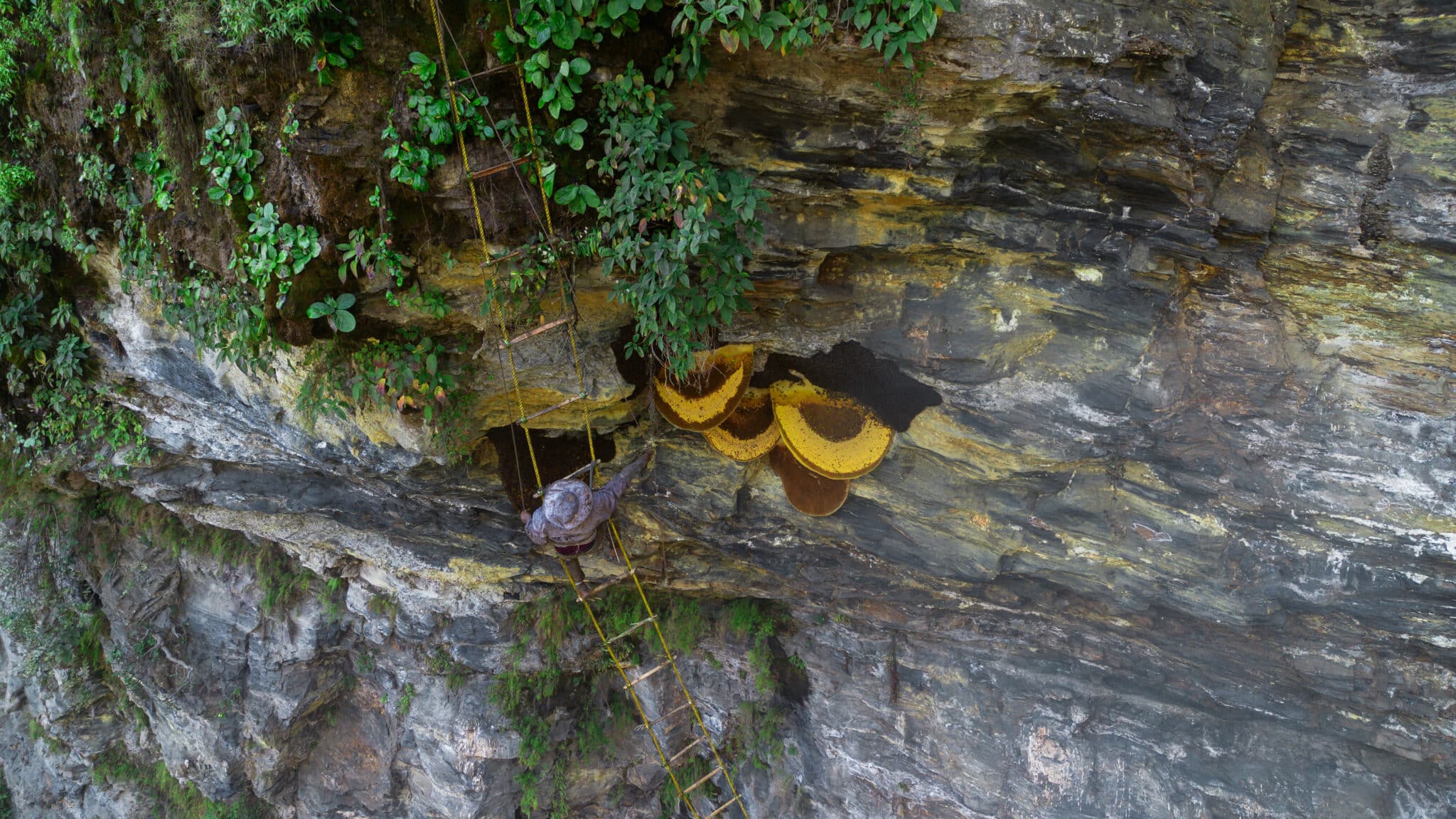
These cliff colonies help protect the bees from predators while allowing access to Nepal’s diverse mountain forests.
Why Himalayan Cliff Honey Is Called Mad Honey
Himalayan Cliff Honey receives the name “Mad Honey” because Apis laboriosa bees forage in areas where certain rhododendron species grow naturally.
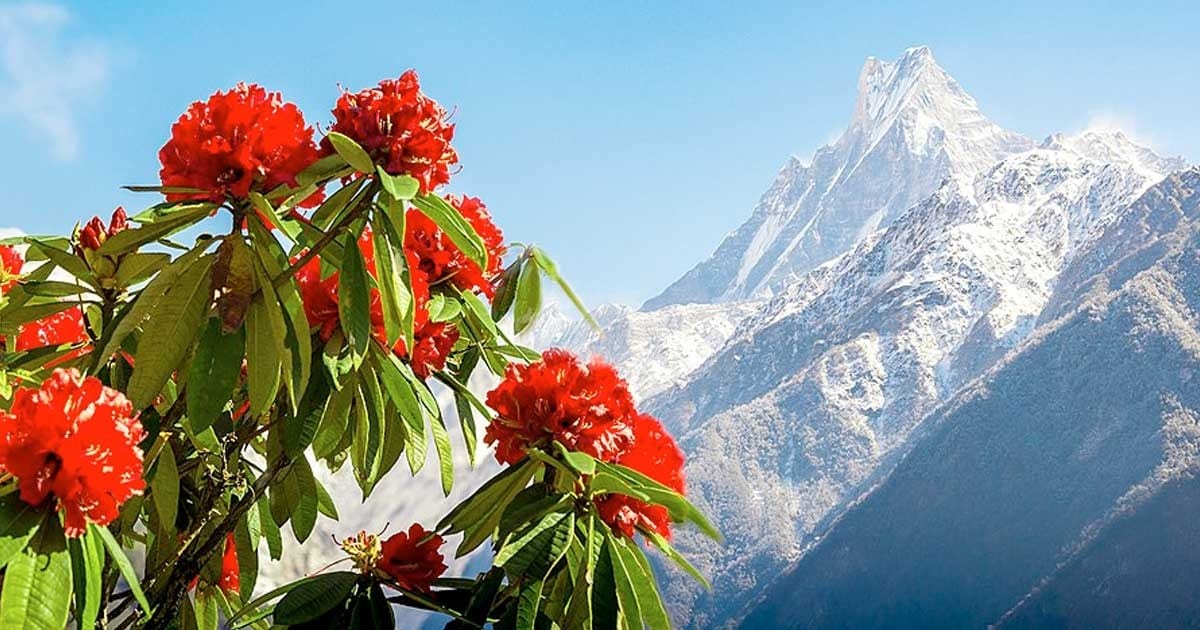
Rhododendrons can contain naturally occurring compounds called grayanotoxins. When bees collect nectar from these flowers, small amounts of these compounds may become part of the honey.
The amount naturally varies based on:
• Elevation
• Harvest season
• Rhododendron bloom
• Region
• Floral diversity
This unique relationship between wild bees and Himalayan plants is one reason Nepalese cliff honey has been studied and valued for generations.
Understanding Himalayan Cliff Honey Grades
Not all Himalayan Cliff Honey harvests are identical.
Traditional grading considers several natural factors:
• Altitude of the Apis laboriosa colonies
• Spring or autumn harvest season
• Floral sources available to the bees
• Region of Nepal where the honey is collected
Higher altitude harvests, especially those from areas rich in rhododendron blooms, are traditionally considered the most sought-after selections.
Lamjung 4000m — Ultra Premium Selection
Our Lamjung 4000m harvest comes from some of the highest cliff regions where Apis laboriosa bees produce honey.
This selection represents a rare combination of:
• Extreme altitude
• Wild rhododendron forests
• Traditional cliff harvesting
• Limited seasonal availability
Spring Harvest vs Autumn Harvest
Like many rare honeys, Himalayan Cliff Honey changes depending on when it is collected.
Spring Harvest
Spring is when rhododendrons bloom throughout the Himalayan mountains.
During this season, Apis laboriosa bees collect nectar from high-altitude flowers, creating honey traditionally recognized for a stronger rhododendron influence, deeper aroma, and unique botanical profile.
Autumn Harvest
Autumn harvests often include nectar from a wider variety of mountain plants and seasonal flowers.
These honeys may have a lighter botanical profile and reflect the changing landscape of the Himalayas.
What Makes Raw Himalayan Cliff Honey Unique?
Himalayan Cliff Honey is harvested traditionally and handled carefully to preserve its natural character.
Raw cliff honey may naturally contain:
• Pollen
• Natural enzymes
• Trace minerals
• Plant-based compounds
• Antioxidants from mountain flora
The exact composition changes from harvest to harvest because the bees are wild and forage naturally across the Himalayan landscape.
Unlike mass-produced commercial honey, each batch reflects the season, altitude, and environment where it was created.
The Ancient Tradition of Himalayan Honey Hunting
Harvesting Himalayan Cliff Honey cannot be done with ordinary beekeeping methods.
For generations, Gurung honey hunters have climbed these remote cliffs using handmade rope ladders and traditional techniques.
Before each harvest, communities prepare tools, gather teams, and follow traditions passed down through generations.
The honey hunters climb hundreds of meters above the ground to carefully collect honeycomb from wild colonies before lowering the harvest back to the community below.
This practice represents courage, cooperation, and deep knowledge of the Himalayan environment.
Our Partnership With Himalayan Cliff Honey Nepal
At Bee-Licious Honey, we believe every honey has a story.
Our Himalayan Cliff Honey comes directly through our partnership with Himalayan Cliff Honey, a family-run company founded by Rasmi Kandel and her family.
Growing up in Lamjung, Rasmi heard stories of local honey hunters climbing Nepal’s cliffs to collect wild honey from Apis laboriosa colonies.
Around 2012, Rasmi and her family began working directly with honey hunters and small-scale beekeepers to help preserve these traditions and connect local communities with larger markets.
Today, Himalayan Cliff Honey works with more than 120 honey-hunting communities and approximately 300 beekeepers throughout Nepal.
As Rasmi explains:
“Authentic Himalayan Cliff Honey comes from real people, real places, and generations of tradition.”
Information about Apis laboriosa, harvest traditions, and Lamjung Cliff Honey was provided through our direct partnership with Himalayan Cliff Honey in Nepal.
Himalayan Cliff Honey vs Turkish Mad Honey
Both Nepal and Turkey are famous for mad honey, but they come from different landscapes.
Nepalese Himalayan Cliff Honey comes from:
• Wild Apis laboriosa bees
• High Himalayan cliff colonies
• Traditional honey-hunting communities
• Mountain regions reaching thousands of meters in elevation
Turkish Mad Honey is produced in the Black Sea region using different bee species, landscapes, and harvesting traditions.
Both represent unique regional honey histories.
About This Guide
This guide was created by Bee-Licious Honey using information shared directly by our partners at Himalayan Cliff Honey in Nepal.
Bee-Licious Honey is an Oregon-based honey company focused on rare honeys, pollinator education, and sharing the stories behind the bees, people, and ecosystems that create some of the world’s most unique honeys.


