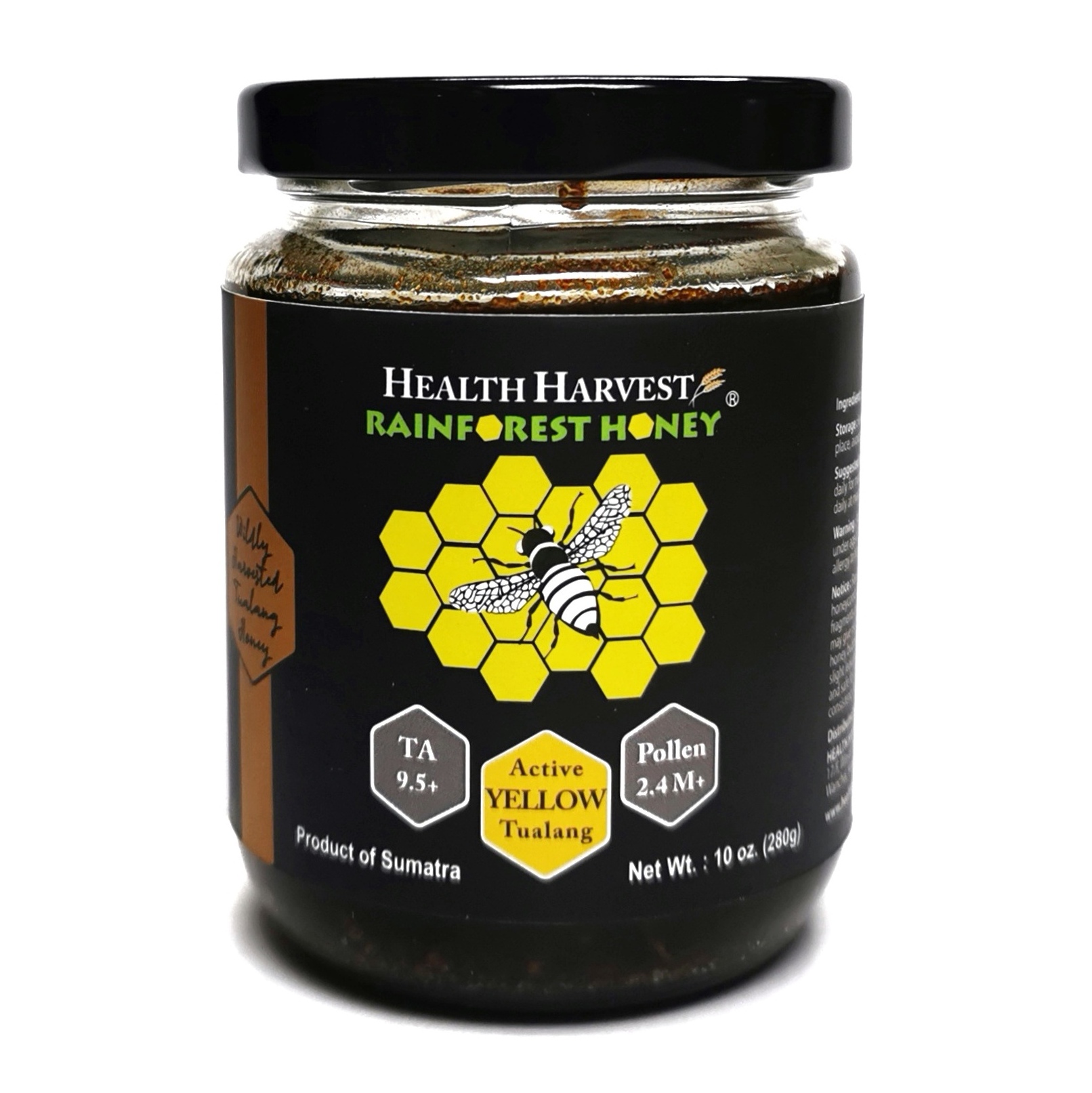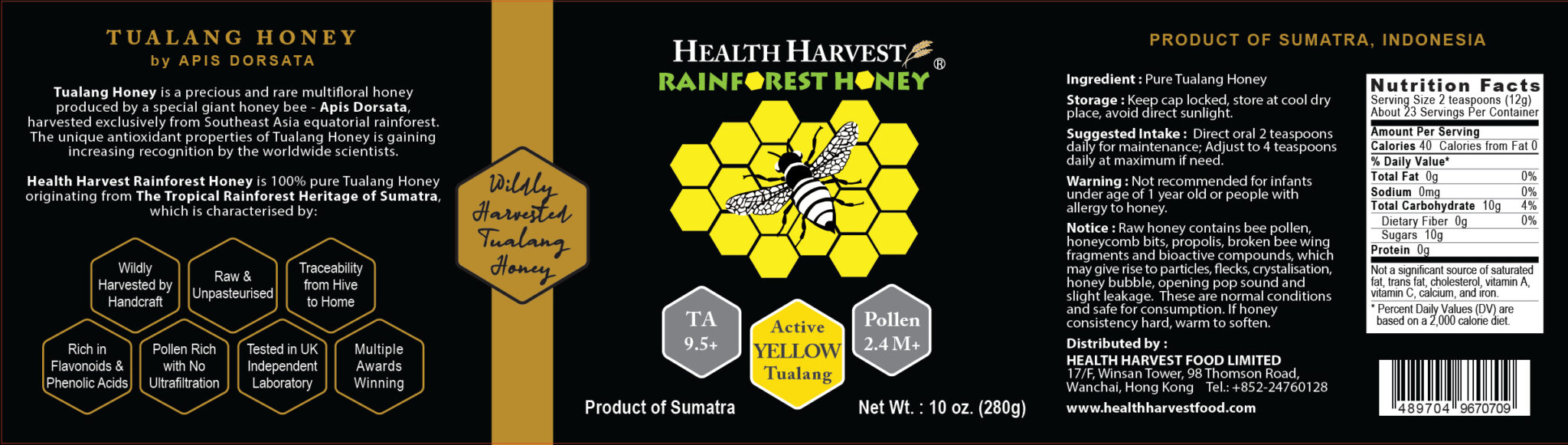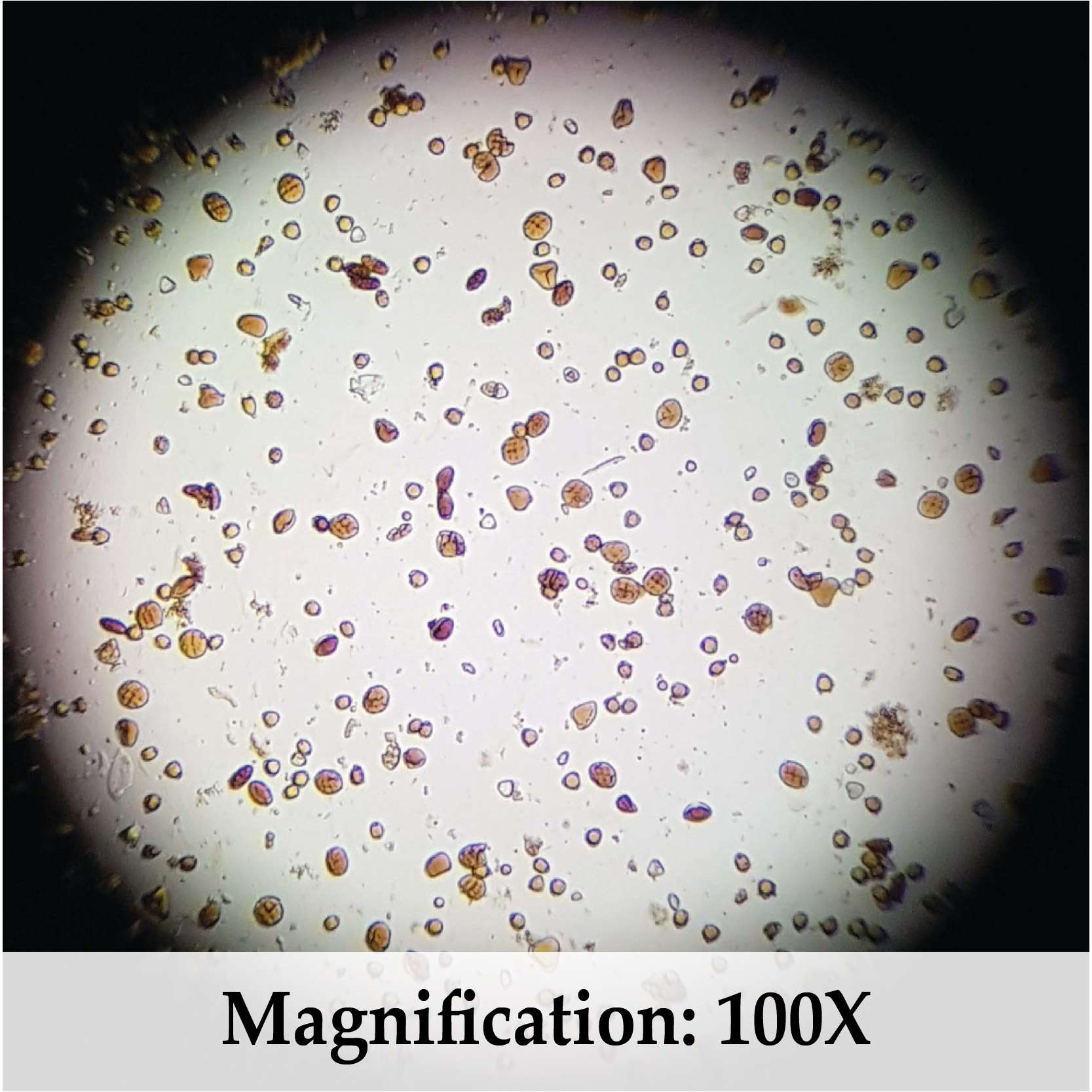
Health Harvest Yellow Tualang Honey is wild harvested from the rainforests of Sumatra and independently laboratory tested for quality, authenticity, Total Activity (TA), and botanical diversity.
Raw Tualang honey harvested from wild Apis dorsata hives, independently tested with TA 9.5+ and rich botanical complexity.
Understanding Health Harvest Tualang Honey Grades
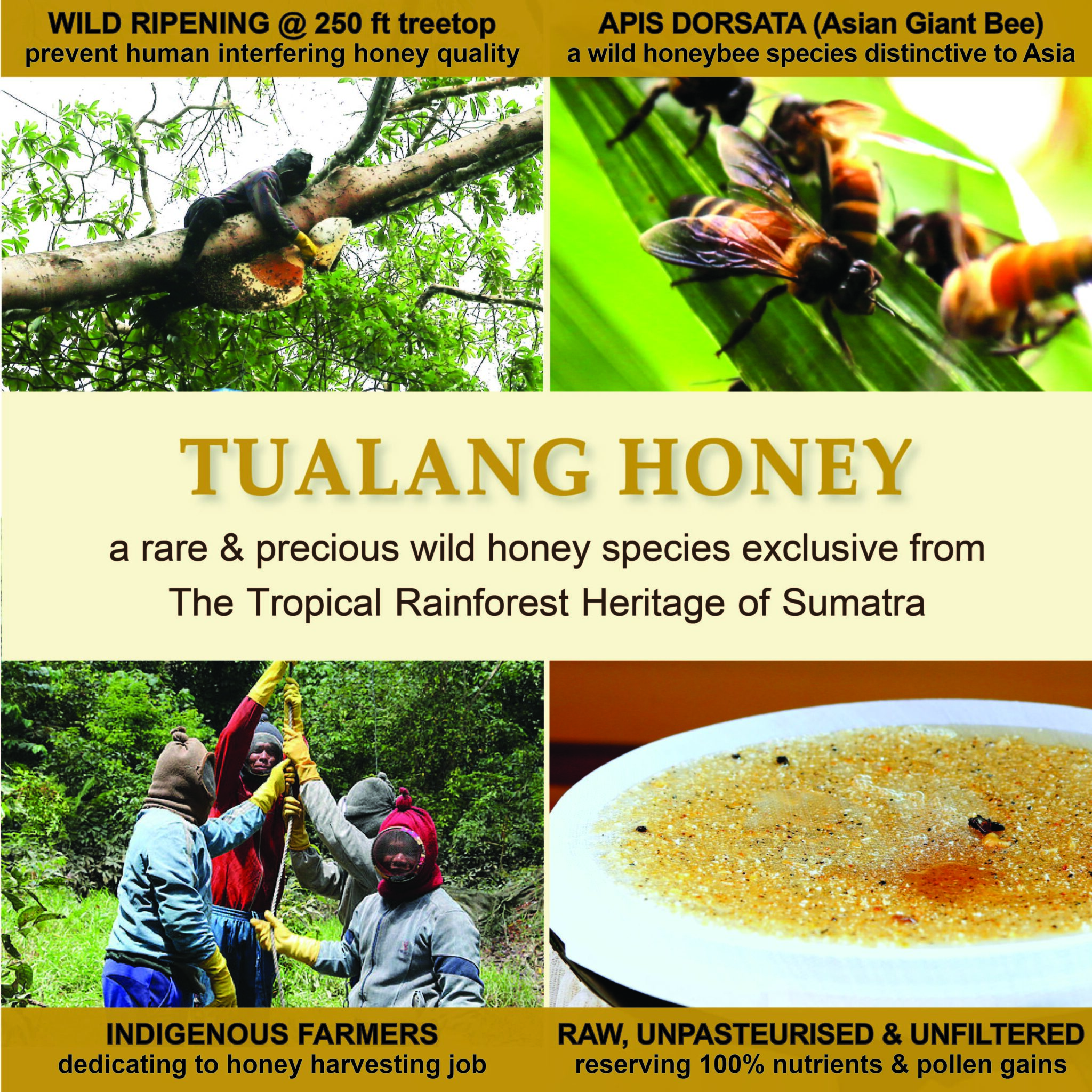
Health Harvest Tualang honey is wild-harvested from the rainforests of Sumatra, Indonesia, by Apis dorsata, the giant Asian honey bee. Each batch is independently laboratory tested and graded using measurable characteristics including Total Activity (TA), pollen count, and pollen diversity.
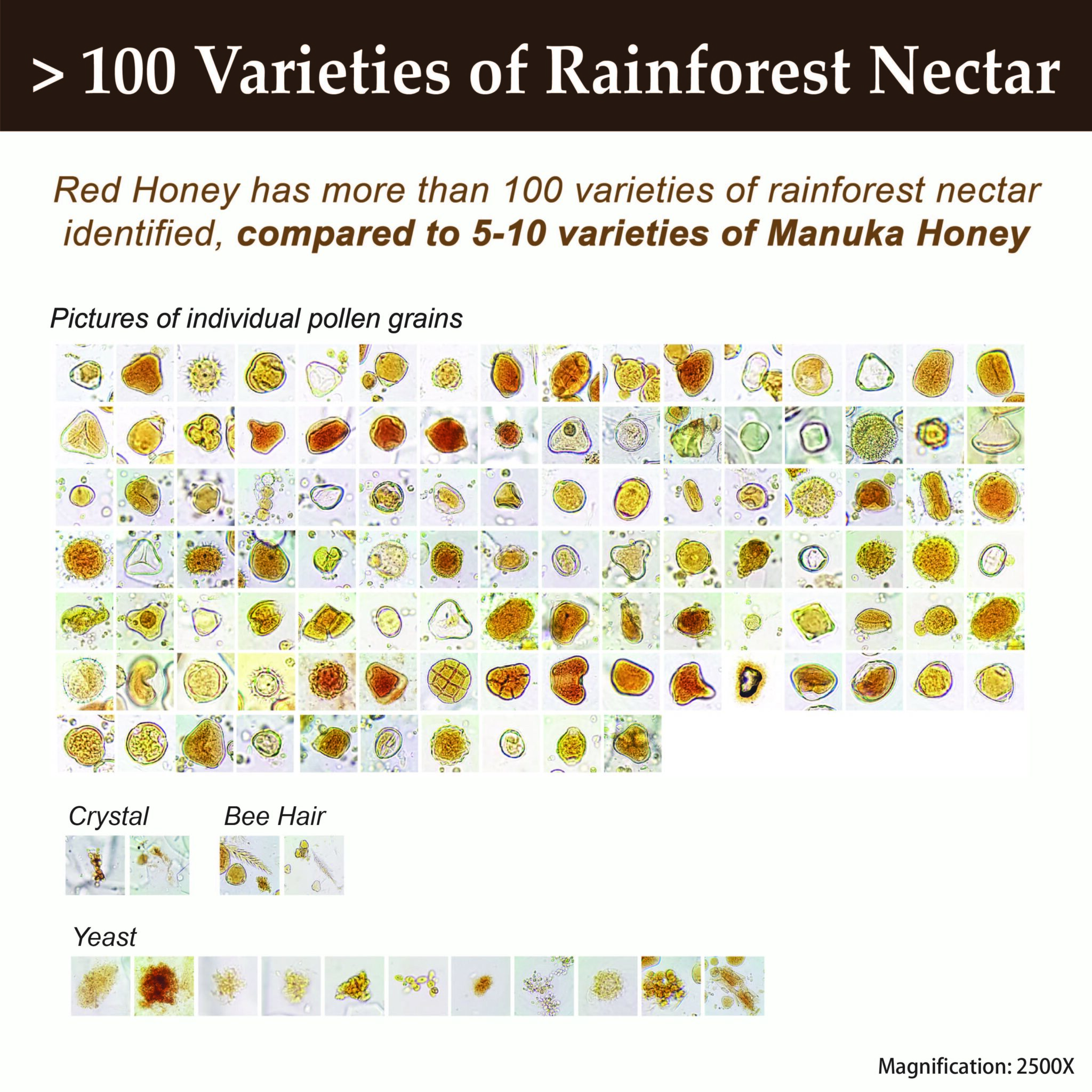
Because Apis dorsata bees forage across many rainforest plant sources, Tualang honey is naturally multifloral. The characteristics of each harvest can vary with flowering plants, season, and environmental conditions.
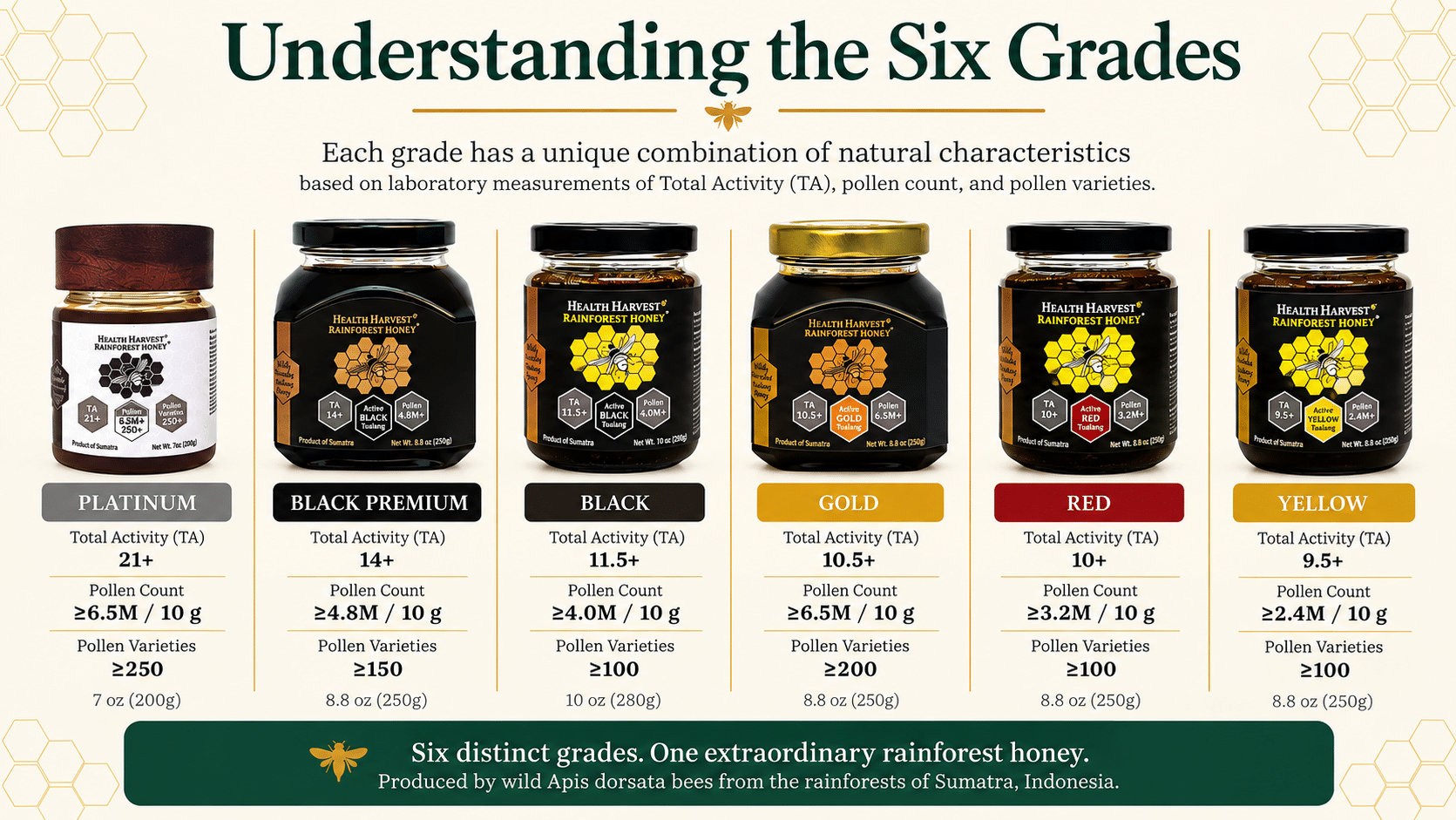
Health Harvest currently offers six Tualang honey grades: Platinum, Gold, Black Premium, Black, Red, and Yellow. The grades are not simply a ranking from best to lowest. Each represents a different combination of laboratory measurements.
| Grade | Total Activity (TA) | Pollen Count* | Pollen Varieties |
|---|---|---|---|
| Platinum | TA 21+ | 6.5M+ | 250+ |
| Gold | TA 10.5+ | 6.5M+ | 200+ |
| Black Premium | TA 14+ | 4.8M+ | 150+ |
| Black | TA 11.5+ | 4.0M+ | 100+ |
| Red | TA 10+ | 3.2M+ | 100+ |
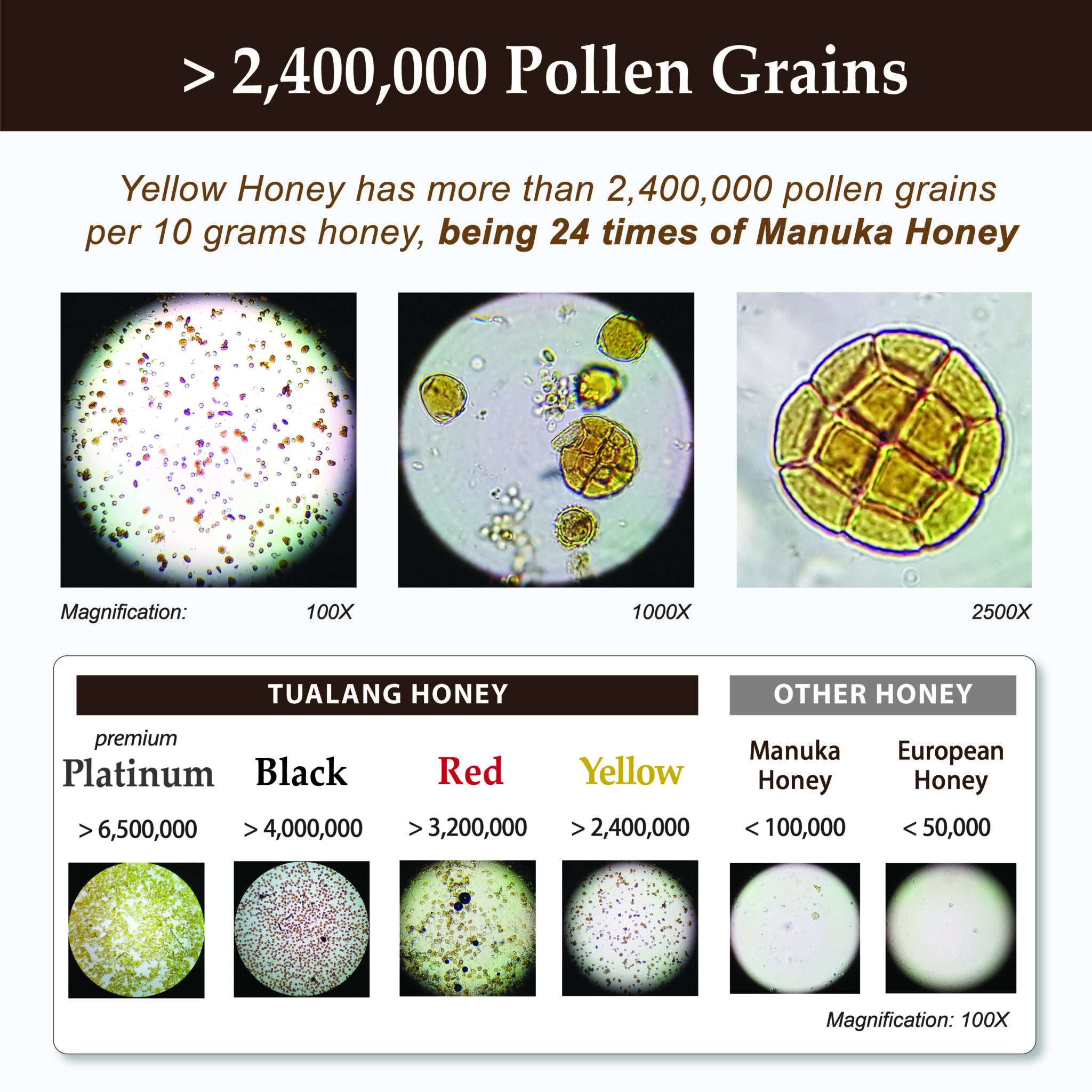
| Yellow | TA 9.5+ | 2.4M+ | 100+ |
Pollen count is reported as pollen grains per 10 grams of honey.
What Do the Tualang Honey Grades Mean?
The grade assigned to a batch reflects the laboratory measurements found in that honey. Total Activity, pollen count, and pollen diversity measure different characteristics, which is why looking at all three provides a better picture than comparing TA alone.
For example, Gold has a lower Total Activity than Black Premium but a higher pollen count and greater pollen diversity. Platinum combines the highest Total Activity and pollen diversity with a 6.5M+ pollen count, which it shares with Gold.
Platinum Tualang Honey
Platinum has TA 21+, a pollen count of 6.5M+, and more than 250 pollen varieties. Platinum combines the highest Total Activity and pollen diversity with a 6.5M+ pollen count, which it shares with Gold.
Gold Tualang Honey
Gold has TA 10.5+, a pollen count of 6.5M+, and more than 200 pollen varieties. Its unusually high pollen count and diversity distinguish Gold from the other grades despite its more moderate Total Activity.
Black Premium Tualang Honey
Black Premium has TA 14+, a pollen count of 4.8M+, and more than 150 pollen varieties. It combines the second-highest Total Activity with substantial pollen density and botanical diversity.
Black Tualang Honey
Black has TA 11.5+, a pollen count of 4.0M+, and more than 100 pollen varieties. Its dark color and robust flavor distinguish it from the lighter Health Harvest grades.
Red Tualang Honey
Red has TA 10+, a pollen count of 3.2M+, and more than 100 pollen varieties. It is distinguished visually by its reddish-brown color and occupies its own grade within the Health Harvest system.
Yellow Tualang Honey
Yellow has TA 9.5+, a pollen count of 2.4M+, and more than 100 pollen varieties. Its golden-amber color makes it the lightest-looking of the six Health Harvest grades.
Why Can Tualang Honey Vary Between Harvests?
Tualang honey comes from wild Apis dorsata colonies rather than managed European honey bee hives. The bees forage across many flowering plants in the Sumatran rainforest, so the nectar sources available to them can change throughout the year.
Those natural differences are one reason laboratory testing is useful: rather than assuming that every harvest is identical, the measurements document characteristics of individual batches.
Learn More About Tualang Honey
Want to learn more about where Tualang honey comes from and what researchers have studied?
- Complete Guide to Tualang Honey
- Tualang Honey Benefits: What Research Shows
- Raw Honey and Brain Health